Friday, March 13, 2009
Blog moving
Hi all - I just wanted to let people know that my blog is permanently moving to my new web site - http://www.anthonyjosephlanman.com/. See you there!


Monday, March 09, 2009
Oh. My. GOD.
I just stumbled across something so amazing, so surprising - I am totally and completely blown away by this. Essentially, this guy scoured You Tube for videos of musicians and singers playing/singing solo. He then mixed and spliced together various videos to create a new song. The process is amazing, and the songs themselves are so - damn - good.
This is something completely of our own time - something that is only possible right now. I'm amazed by this - I can't say that enough. Here is the first video I saw - I'll embed that in this post - after, I'll post the link to hear all of his songs that he's created - and they're all great - I would highly recommend watching them all.
http://thru-you.com/#/videos/3/
This is something completely of our own time - something that is only possible right now. I'm amazed by this - I can't say that enough. Here is the first video I saw - I'll embed that in this post - after, I'll post the link to hear all of his songs that he's created - and they're all great - I would highly recommend watching them all.
http://thru-you.com/#/videos/3/
Thursday, March 05, 2009
Remembering Mandy on March 5th
Today is the 7th anniversary of my friend Mandy Morris' death. In rememberance, I thought I would post the audio to my piece that I wrote to honor her memory, the Hommage a Mandy Morris, and also the piece by Mandy that inspired it.
After her death, Mandy's mom, Sherry Morris-Imhoff, gave me a CD of ten pop songs that Mandy had written and recorded on her little mini-disc recorder. The sixth one was just an unfinished song that I really latched onto, and used as the base material for my piece. I never knew the title of any of her songs, because she never showed the songs to anyone while she was alive, so I just dubbed it Pop Song VI. Anyway, wherever Mandy is, she is missed.
AUDIO: MANDY MORRIS, POP SONG VI
AUDIO: ANTHONY JOSEPH LANMAN, HOMMAGE A MANDY MORRIS (KAORU YAMAMURA, PIANO)
After her death, Mandy's mom, Sherry Morris-Imhoff, gave me a CD of ten pop songs that Mandy had written and recorded on her little mini-disc recorder. The sixth one was just an unfinished song that I really latched onto, and used as the base material for my piece. I never knew the title of any of her songs, because she never showed the songs to anyone while she was alive, so I just dubbed it Pop Song VI. Anyway, wherever Mandy is, she is missed.
AUDIO: MANDY MORRIS, POP SONG VI
AUDIO: ANTHONY JOSEPH LANMAN, HOMMAGE A MANDY MORRIS (KAORU YAMAMURA, PIANO)
Tuesday, March 03, 2009
15 albums that changed your life (11-15)
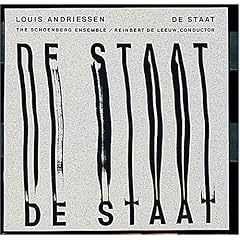
11) DE STAAT - LOUIS ANDRIESSEN

I was first introduced to De Staat in the Spring of 2000, during my last semester at the University of Texas. My friend and fellow composer Rafael Hernandez and I would, at least once a week, listen to pieces of new music that we didn't know, but felt like we should know. One week, Rafael chose De Staat by Dutch composer Louis (pronounced Louie) Andriessen. The only other thing of Andriessen's I'd ever heard was a performance by Bang on a Can of his Hoketus, which I wasn't into at all (and I'm still not). So, we sat down to listen.
I'm not sure why, but when I heard it for the first time at our little listening session, I violently rejected it. I hated it - plain and simple. I don't know if it was just because it was something so different and so out of my experience at that time that my brain just wouldn't take it in - lol - idk.
About a year later, during my first year at Indiana University, I was in the music library, and for some inexplicable reason, I decided to give the piece another shot. I checked out the CD and score, and sat down to listen to De Staat for the second time.
About 6 or 7 minutes in, my mouth was hanging open, and I was thinking "How could I have totally misjudged something so terribly." It actually kind of disturbed me, and taught me a valuable lesson, which is when approaching something new, to try to drop all of your preconceived notions about what makes something "good" and try to be as open as possible. This is of course easier said than done, but I still try to live by this rule.
The first thing that really stuck me about De Staat was the "orchestra" itself. It is highly unusual - and Andriessen wrote so many works with similar orchestras, that "Andriessen bands" have now begun cropping up across Europe. The orchestra for De Staat is:
4 Women's Voices
4 Oboes
4 Trumpets in C
4 Horns in F
4 Trombones
2 Electric Guitars
Electric Bass Guitar (6-string)
2 Harps
2 Pianos
4 Violas
Furthermore, the whole orchestra and voices were miced and mixed (as in amplified with microphones, etc and mixed by a sound engineer through a mixing board), more like a rock band would be than a classical ensemble. The text excerpts that Andriessen used are from Plato's Republic, which consist of dialogues between a teacher and a student learning about music and how those concepts relate to Greek society (and contemporary society as well).
I will post an excerpt from the piece below, as the entire work is about 36 minutes long. One of my absolute favorite parts begins at 5:46 in the excerpt. It's some of the most dynamic brass writing I've ever heard, and I always wondered how many rehearsals it must have taken to get that tight. Another technique Andriessen used is antiphonal placement of the brass, which hearkens back to the 16th century, when Andrea and Giovanni Gabrielli would place multiple brass groups on the north, south, east and west sides of St. Mark's Basilica in Venice, Italy. The parishioners would have sound coming at them from different places at different times, or sometimes all at once. It was the worlds first form of surround sound.
Andriessen has followed this tradition by splitting the brass into 2 groups and placing them on the far right and left of the stage, stereophonically. It's difficult to hear in the recording (although it's a little easier to hear with headphones on), but at the 5:46 mark in the excerpt, he really uses it well. Live, you would hear the brass shooting back and forth from left to right to left, etc very fast. I've unfortunately never seen the piece live, but it must be striking to hear.
AUDIO: DE STAAT
12) PAUL GALBRAITH, LUTE SUITES AND VIOLIN SONATAS AND PARTITAS OF J.S. BACH

This is actually two different CDs, but they both came out at about the same time, and I discovered them both at the same time. All of these pieces were favorites of mine before I ever heard of Paul Galbraith. When I first saw the CD, and the picture of this guy playing a funky looking 8-string classical guitar, slung over his left shoulder like a cello and sporting an end-pin (also like a cello) that was sitting on top of a big resonator box on the floor, I was like WTF?!?
Galbraith's approach to guitar playing is totally and utterly unique. Where he got the idea to have such a guitar built, and also the idea to completely reject and re-invent classical guitar technique I have no idea. But, it all worked, and worked incredibly.
Because of his increased range (his guitar has one extra high string and one extra low string), he could play the Bach pieces as they were intended to be played. What I mean by this is, as guitarists, we constantly have to bring bass notes up an octave from where Bach wrote them, because our modern guitars simply don't have the range that the lutes of Bach's day did. Hearing Galbraith's versions in the original octaves and his incredible ornamentation skills really put these pieces in a new light for me, and expanded in my mind what was possible with the guitar. Galbraith's design for his 8-string guitar inspired my own design for my 8-string electric guitar.
I'm going to post the entire Prelude, Fugue and Allegro BWV 998 below. This is one of the greatest pieces by Bach, period, hands down, for any instrument or combination of instruments in my opinion. It also contains one of Bach's greatest fugues, period. It's sad that these pieces are little known outside of the classical guitar world, simply because they don't exist in any other forms like many of the violin sonatas and partitas do for example. I should mention that this piece is starting to come to the attention of more keyboard players with the re-discovery of the lautenwerk, a lute-harpsichord that was played by Bach, and many believe he really wrote all of his lute suites for this instrument and not for the lute itself. For a very long time, people knew about the lautenwerk from books, but not a single instrument survived to the present day, so it wasn't until very recently that a few harpsichord makers actually started to re-create lautenwerks based on descriptions from baroque sources. There's actually a fantastic recording of the Prelude, Fugue and Allegro on the lautenwerk on the Naxos label by keyboardist Elizabeth Farr.
AUDIO: PRELUDE, FUGUE AND ALLEGRO BWV 998
13) RADIOHEAD - OK COMPUTER

I first heard OK Computer at a party in Indiana. I had heard of Radiohead, and their early "hits", like Creep, which I liked, but wasn't knocked out by or anything. After kind of hearing OK Computer in the background during the party, and catching bits of it here and there, I asked the guy hosting the party if he would mind playing the CD again. No one seemed to mind, so he did and I really listened the second time around.
I was amazed by the variety in the album, and the complexity of the song writing, but at the same time how incredibly unified every song was. And despite the great variety among songs, the album seemed incredibly unified as a whole. From here I started to check out more of their albums (at this time Anmesiac has just come out). Radiohead seemed to be able to take huge risks in re-inventing themselves with every album, yet managed to produce something that was at least as good as their previous effort, and still come out sounding like themselves - a feat that they continue to pull off to this day.
I can tell you, from a composers perspective, this is the ultimate achievement in creating music - creating a sound that is all your own, while being so ingrained in that sound, you can branch out and experiment while maintaining the integrity of it all. These guys are, to me, every bit as genius as any classical music composer ever was.
AUDIO: PARANOID ANDROID
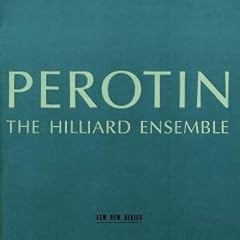
14) HILLIARD ENSEMBLE - PEROTIN

A few years later, I was full on into studying early music, and just starting my renaissance lute study with Nigel North at Indiana University. I don't remember how I found this CD - all I remember is how blown away by it I was. I guess I was expecting to hear something like chant, or even something like renaissance church music that you'd expect - something like Palestrina I guess. This was a sound that I totally didn't expect - that I'd never heard. It was like something from another planet to me when I first heard it. I had no idea that music like this ever existed.
I should get into the history of it a little bit so you can understand. Perotin lived in France around the year 1200, and worked in the then recently completed Notre Dame cathedral. All we know of him comes from what are essentially class notes, taken by a music student there a generation after Perotin's death, from a student only known to us as "Anonymous IV". Anonymous IV referred to him as Perotin the Great, and as the best composer of discant, which was an early form of polyphony. The reason I had never heard anything like this is because in later centuries, as the renaissance grew, this kind of polyphony was deemed "archaic", and was strictly forbidden, ensuring that Perotin and his music would be lost to time for about 6 or 7 hundred years (until re-discovered in the 20th century).
Perotin's music has had a HUGE impact on me as a composer, and I have used his polyphonic and contrapuntal principles in my own music. I look to Perotin as a teacher of counterpoint more than I look to Bach, and that's saying something for any composer. I can only imagine what this music must have sounded like in the massive, reverberated, cavernous space of Notre Dame. It must have sounded truly like music worthy of praising God. Listen for the incredible 2-1 suspension at 9:27 - gives me chills every time.
AUDIO: VIDERUNT OMNES
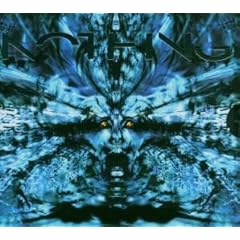
15) MESHUGGAH - NOTHING

Around the same time, my friend Rafael Hernandez was introduced to Meshuggah through one of his students, and he introduced it to me, knowing it might be something I would like. Even though I've been a long time fan of metal, I hadn't discovered anything new that really blew my socks off in probably ten years or more, so I wasn't expecting a whole lot. But again, as with every other album on this list, it simply blew my mind.
Meshuggah is part of a new wave of metal coming from the Nordic countries - in Meshuggah's case, Sweden. They're breathing new life and vigor into the genre, and for me, Meshuggah is the best of the lot. You have to think of this music as almost exclusively rhythm - like a tribal drum ensemble or something. I have never heard such complex rhythm in any kind of popular music as with Meshuggah. The odd meters and complex poly-rhythmic patterns are mind bending - and I think the drummer is super human - hehe. The guitar soloing style is also really unique for metal. It's more akin to jazz fusion a la Allan Holdsworth than anything in rock or metal guitar.
I also feel I need to say something about the "cookie monster" vocals - lol. Many people dismiss these vocals as merely some guy screaming, with the tone of the voice immediately conjuring feelings of screaming out in pain, or anger. I would ask you though, if you were going to invent a vocal style that would match the tone and timbre of the heavily rhythmic and distorted guitars, what would you do? This is essentially what vocalist Jens Kidman has done, and rhythmically speaking, his vocal delivery is right in step with the complex rhythms of the band around him - almost very close to rap at times in terms of rhythmic placement of syllables.
Meshuggah continue to put out great albums, my favorite being Catch 33. But, Nothing was where I started with them, and I still love it.
AUDIO: CLOSED EYE VISUALS
I was first introduced to De Staat in the Spring of 2000, during my last semester at the University of Texas. My friend and fellow composer Rafael Hernandez and I would, at least once a week, listen to pieces of new music that we didn't know, but felt like we should know. One week, Rafael chose De Staat by Dutch composer Louis (pronounced Louie) Andriessen. The only other thing of Andriessen's I'd ever heard was a performance by Bang on a Can of his Hoketus, which I wasn't into at all (and I'm still not). So, we sat down to listen.
I'm not sure why, but when I heard it for the first time at our little listening session, I violently rejected it. I hated it - plain and simple. I don't know if it was just because it was something so different and so out of my experience at that time that my brain just wouldn't take it in - lol - idk.
About a year later, during my first year at Indiana University, I was in the music library, and for some inexplicable reason, I decided to give the piece another shot. I checked out the CD and score, and sat down to listen to De Staat for the second time.
About 6 or 7 minutes in, my mouth was hanging open, and I was thinking "How could I have totally misjudged something so terribly." It actually kind of disturbed me, and taught me a valuable lesson, which is when approaching something new, to try to drop all of your preconceived notions about what makes something "good" and try to be as open as possible. This is of course easier said than done, but I still try to live by this rule.
The first thing that really stuck me about De Staat was the "orchestra" itself. It is highly unusual - and Andriessen wrote so many works with similar orchestras, that "Andriessen bands" have now begun cropping up across Europe. The orchestra for De Staat is:
4 Women's Voices
4 Oboes
4 Trumpets in C
4 Horns in F
4 Trombones
2 Electric Guitars
Electric Bass Guitar (6-string)
2 Harps
2 Pianos
4 Violas
Furthermore, the whole orchestra and voices were miced and mixed (as in amplified with microphones, etc and mixed by a sound engineer through a mixing board), more like a rock band would be than a classical ensemble. The text excerpts that Andriessen used are from Plato's Republic, which consist of dialogues between a teacher and a student learning about music and how those concepts relate to Greek society (and contemporary society as well).
I will post an excerpt from the piece below, as the entire work is about 36 minutes long. One of my absolute favorite parts begins at 5:46 in the excerpt. It's some of the most dynamic brass writing I've ever heard, and I always wondered how many rehearsals it must have taken to get that tight. Another technique Andriessen used is antiphonal placement of the brass, which hearkens back to the 16th century, when Andrea and Giovanni Gabrielli would place multiple brass groups on the north, south, east and west sides of St. Mark's Basilica in Venice, Italy. The parishioners would have sound coming at them from different places at different times, or sometimes all at once. It was the worlds first form of surround sound.
Andriessen has followed this tradition by splitting the brass into 2 groups and placing them on the far right and left of the stage, stereophonically. It's difficult to hear in the recording (although it's a little easier to hear with headphones on), but at the 5:46 mark in the excerpt, he really uses it well. Live, you would hear the brass shooting back and forth from left to right to left, etc very fast. I've unfortunately never seen the piece live, but it must be striking to hear.
AUDIO: DE STAAT
12) PAUL GALBRAITH, LUTE SUITES AND VIOLIN SONATAS AND PARTITAS OF J.S. BACH

This is actually two different CDs, but they both came out at about the same time, and I discovered them both at the same time. All of these pieces were favorites of mine before I ever heard of Paul Galbraith. When I first saw the CD, and the picture of this guy playing a funky looking 8-string classical guitar, slung over his left shoulder like a cello and sporting an end-pin (also like a cello) that was sitting on top of a big resonator box on the floor, I was like WTF?!?
Galbraith's approach to guitar playing is totally and utterly unique. Where he got the idea to have such a guitar built, and also the idea to completely reject and re-invent classical guitar technique I have no idea. But, it all worked, and worked incredibly.
Because of his increased range (his guitar has one extra high string and one extra low string), he could play the Bach pieces as they were intended to be played. What I mean by this is, as guitarists, we constantly have to bring bass notes up an octave from where Bach wrote them, because our modern guitars simply don't have the range that the lutes of Bach's day did. Hearing Galbraith's versions in the original octaves and his incredible ornamentation skills really put these pieces in a new light for me, and expanded in my mind what was possible with the guitar. Galbraith's design for his 8-string guitar inspired my own design for my 8-string electric guitar.
I'm going to post the entire Prelude, Fugue and Allegro BWV 998 below. This is one of the greatest pieces by Bach, period, hands down, for any instrument or combination of instruments in my opinion. It also contains one of Bach's greatest fugues, period. It's sad that these pieces are little known outside of the classical guitar world, simply because they don't exist in any other forms like many of the violin sonatas and partitas do for example. I should mention that this piece is starting to come to the attention of more keyboard players with the re-discovery of the lautenwerk, a lute-harpsichord that was played by Bach, and many believe he really wrote all of his lute suites for this instrument and not for the lute itself. For a very long time, people knew about the lautenwerk from books, but not a single instrument survived to the present day, so it wasn't until very recently that a few harpsichord makers actually started to re-create lautenwerks based on descriptions from baroque sources. There's actually a fantastic recording of the Prelude, Fugue and Allegro on the lautenwerk on the Naxos label by keyboardist Elizabeth Farr.
AUDIO: PRELUDE, FUGUE AND ALLEGRO BWV 998
13) RADIOHEAD - OK COMPUTER

I first heard OK Computer at a party in Indiana. I had heard of Radiohead, and their early "hits", like Creep, which I liked, but wasn't knocked out by or anything. After kind of hearing OK Computer in the background during the party, and catching bits of it here and there, I asked the guy hosting the party if he would mind playing the CD again. No one seemed to mind, so he did and I really listened the second time around.
I was amazed by the variety in the album, and the complexity of the song writing, but at the same time how incredibly unified every song was. And despite the great variety among songs, the album seemed incredibly unified as a whole. From here I started to check out more of their albums (at this time Anmesiac has just come out). Radiohead seemed to be able to take huge risks in re-inventing themselves with every album, yet managed to produce something that was at least as good as their previous effort, and still come out sounding like themselves - a feat that they continue to pull off to this day.
I can tell you, from a composers perspective, this is the ultimate achievement in creating music - creating a sound that is all your own, while being so ingrained in that sound, you can branch out and experiment while maintaining the integrity of it all. These guys are, to me, every bit as genius as any classical music composer ever was.
AUDIO: PARANOID ANDROID
14) HILLIARD ENSEMBLE - PEROTIN
A few years later, I was full on into studying early music, and just starting my renaissance lute study with Nigel North at Indiana University. I don't remember how I found this CD - all I remember is how blown away by it I was. I guess I was expecting to hear something like chant, or even something like renaissance church music that you'd expect - something like Palestrina I guess. This was a sound that I totally didn't expect - that I'd never heard. It was like something from another planet to me when I first heard it. I had no idea that music like this ever existed.
I should get into the history of it a little bit so you can understand. Perotin lived in France around the year 1200, and worked in the then recently completed Notre Dame cathedral. All we know of him comes from what are essentially class notes, taken by a music student there a generation after Perotin's death, from a student only known to us as "Anonymous IV". Anonymous IV referred to him as Perotin the Great, and as the best composer of discant, which was an early form of polyphony. The reason I had never heard anything like this is because in later centuries, as the renaissance grew, this kind of polyphony was deemed "archaic", and was strictly forbidden, ensuring that Perotin and his music would be lost to time for about 6 or 7 hundred years (until re-discovered in the 20th century).
Perotin's music has had a HUGE impact on me as a composer, and I have used his polyphonic and contrapuntal principles in my own music. I look to Perotin as a teacher of counterpoint more than I look to Bach, and that's saying something for any composer. I can only imagine what this music must have sounded like in the massive, reverberated, cavernous space of Notre Dame. It must have sounded truly like music worthy of praising God. Listen for the incredible 2-1 suspension at 9:27 - gives me chills every time.
AUDIO: VIDERUNT OMNES
15) MESHUGGAH - NOTHING
Around the same time, my friend Rafael Hernandez was introduced to Meshuggah through one of his students, and he introduced it to me, knowing it might be something I would like. Even though I've been a long time fan of metal, I hadn't discovered anything new that really blew my socks off in probably ten years or more, so I wasn't expecting a whole lot. But again, as with every other album on this list, it simply blew my mind.
Meshuggah is part of a new wave of metal coming from the Nordic countries - in Meshuggah's case, Sweden. They're breathing new life and vigor into the genre, and for me, Meshuggah is the best of the lot. You have to think of this music as almost exclusively rhythm - like a tribal drum ensemble or something. I have never heard such complex rhythm in any kind of popular music as with Meshuggah. The odd meters and complex poly-rhythmic patterns are mind bending - and I think the drummer is super human - hehe. The guitar soloing style is also really unique for metal. It's more akin to jazz fusion a la Allan Holdsworth than anything in rock or metal guitar.
I also feel I need to say something about the "cookie monster" vocals - lol. Many people dismiss these vocals as merely some guy screaming, with the tone of the voice immediately conjuring feelings of screaming out in pain, or anger. I would ask you though, if you were going to invent a vocal style that would match the tone and timbre of the heavily rhythmic and distorted guitars, what would you do? This is essentially what vocalist Jens Kidman has done, and rhythmically speaking, his vocal delivery is right in step with the complex rhythms of the band around him - almost very close to rap at times in terms of rhythmic placement of syllables.
Meshuggah continue to put out great albums, my favorite being Catch 33. But, Nothing was where I started with them, and I still love it.
AUDIO: CLOSED EYE VISUALS
Monday, March 02, 2009
15 albums that changed your life (6-10)
6) BELA BARTOK - MUSIC FOR STRINGS, PERCUSSION AND CELESTA

After I graduated high school in 1991, I entered the University of Houston studying Communications, with a secret desire to study music. My first semester, I took one of my arts electives and signed up for a music class. It was kind of an informal music history class for non-music majors. By this time I was getting more and more interested in classical music, and I wanted to learn as much about it as I could. I was listening to the classics at home and even reading music history texts for "fun" - lol. I was also starting to teach myself how to read and write music at this time.
During the first day of class - the FIRST DAY - the professor played us the 4th movement of Bartok's Music for Strings, Percussion and Celesta. I never expected to hear anything like this on the first day of class. I think this was the first piece of classical music written in the 20th century that I ever heard. I was totally and completely blown away by it. It had everything I loved about music at that time - the power and intensity of the metal, the depth and complexity of prog, and so, so much more. It kind of opened my eyes to what was possible and set me on the path to becoming a composer. This was definitely a big one for me.
AUDIO: MUSIC FOR STRINGS, PERCUSSION AND CELESTA, IV.
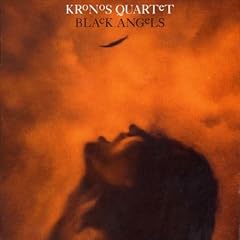
7) KRONOS QUARTET - BLACK ANGELS

Around the same time, I discovered the Kronos Quartet album Black Angels in kind of a round-about way. I was listening to the then new Faith No More album Angel Dust, and there was a song on there called Malpractice. Even though this was a pretty hard core metal tune, there were samples you could hear towards the end of a string quartet woven into the fabric of the music. I thought this sounded awesome, and I was pretty sure it wasn't anything that Faith No More had written, so I went into the liner notes and discovered that the samples were taken from this Kronos album, from a piece by someone named Schostakovich.
It turned out to be Dmitri Schostakovich's String Quartet #8, which was the last piece on this album of music for string quartet. Also, Kronos had included probably my first introduction to "early" music - the 40 voice motet Spem in Alium of Thomas Tallis. Also the title cut Black Angels by George Crumb scared the shit out of me :)
The String Quartet #8 was incredible - especially when I realized this guy was writing heavy metal music years before heavy metal was supposedly birthed by Black Sabbath. And this music was ten times more intense than any heavy metal album I had ever heard. I was also really fascinated by Schotakovich's use of his initials D.S.C.H (translated into notes as D-E flat-C-B) as the main musical motive (I was unaware at this time that this was a tradition started by Bach, where Bach had used his own name B.A.C.H (B flat-A-C-B) as a musical motive in many of his works).
Schostakovich wrote in his memoirs this, about the affect the piece had on him as he was composing it: "The psuedo-tragedy of this quartet is such that, while I was composing it, the tears just kept streaming down like urine after a half-dozen beers." Wow.
AUDIO: KRONOS QUARTET - DMITRI SCHOSTAKOVICH, STRING QUARTET NO. 8, SECOND MOVEMENT
8) DR. DRE - THE CHRONIC

In 1993, I was working at Blockbuster Music, the now non-existent record store that was started by Blockbuster Video in the early '90s. I worked with this guy named Mitch Davis, who at the time must have been around 30 years old - I was maybe 20 at the time. Mitch was from one of the inner city Houston neighborhoods, sported a huge afro, and was one of the coolest and smartest dudes I have ever met. The guy had no formal music education, but knew more about music than most music professors I've known over the years. He was especially knowledgeable about jazz, soul, funk and rap/hip-hop, and as I knew next to nothing about any of these genres at the time, he was truly one of my first professors of music, and I really looked up to him. I learned from Mitch many, many things, but most importantly that you didn't need a degree in music to really know music.
One of the albums that Mitch introduced me to was The Chronic by Dr. Dre. Hearing Mitch talk intelligently about rap, and how this album represented real frustrations and issues that existed in the ghettos opened my eyes to rap as serious American art. It was a world that was totally foreign to me, but one that Mitch grew up in. He introduced me to many other great artists - Miles Davis and John Coltrane - Erykah Badu and Me'Shell Ndegeocello - and many others. But I think The Chronic had the biggest impact on me. I have no idea what ever happened to Mitch, but I hope I can re-connect with him someday.
AUDIO: DR. DRE - A NIGGA WITTA GUN (small warning - probably don't want the kids to hear this one)
9) FRANK ZAPPA - HOT RATS

Probably about a year later, while still working at the record store, my musical curiosity was in full bloom. Blockbuster Music's gimmick was that you could come into the store a literally pull any CD off the shelf, bring it to the "listening station" and listen to it. I was taking full advantage of this and devouring music on a daily basis. I kept hearing things about Frank Zappa, and I would see his records all the time in the store, but I hadn't ventured there yet - not sure what was holding me back. Finally, my curiosity gave way, and I picked up one random album and brought it up to the listening booth, where I believe Mitch opened and played the CD for me.
I was sitting there with my headphones on when the first track Peaches En Regalia came on. From the first ten seconds I was like "What the hell IS this???" - but in a good way - lol. It was another one of those moments when I was completely blown away by a sound I'd never heard before. It was like rock and classical and jazz and something unnameably weird all rolled into one. After listening to the first track, I remember looking at Mitch with a stunned look on my face, uttering an expletive, and knowing that I would be a Zappa fan from then on. Mitch just smiled back at me with a look on his face that said "I knew you'd like that." The rest of the album was just as strange and wonderful, and Zappa's guitar soloing style is utterly unique - no one else sounds like he does.
I would later discover many great Zappa albums, including Apostrophe and One Size Fits All, which contains the song Inca Roads that I based my own piece Hommage a Frank Zappa on. Even later I would keep discovering music from this genius - classical music albums like The Yellow Shark and Civilization, Phase Three.
AUDIO: FRANK ZAPPA, PEACHES EN REGALIA
10) STEVE REICH/PAT METHENY - ELECTRIC COUNTERPOINT

I think just before I went off to music school in 1996, I discovered Electric Counterpoint by Steve Reich. I was listening to more and more classical music at the time, and was going through every album by the Kronos Quartet I could find. I initially picked this one up because one of the pieces, Different Trains, was performed by Kronos. The other piece on the CD Electric Counterpoint was performed by the jazz guitarist Pat Metheny. I had heard of Metheny, but had never heard any of his music at this time. I had no idea what to expect of this piece - a piece of classical music for electric guitar?? And not just for electric guitar, but 13 electric guitars all layered on top of each other.
This was my first introduction to "minimalist" music, and the rhythms and harmonies were so close to the music I was already used to, I immediately identified with it. I thought the sound of all those guitars woven together like threads in a tapestry was fascinating, and I loved the groove of the third movement. This is the piece that made me realize that classical music and pop/rock music didn't have to be these two completely separated worlds. They could co-exist together. I have since performed this piece myself, and I love it to death. Steve Reich has also become one of my favorite composers, period.
AUDIO: PAT METHENY: STEVE REICH, ELECTRIC COUNTERPOINT, III.

After I graduated high school in 1991, I entered the University of Houston studying Communications, with a secret desire to study music. My first semester, I took one of my arts electives and signed up for a music class. It was kind of an informal music history class for non-music majors. By this time I was getting more and more interested in classical music, and I wanted to learn as much about it as I could. I was listening to the classics at home and even reading music history texts for "fun" - lol. I was also starting to teach myself how to read and write music at this time.
During the first day of class - the FIRST DAY - the professor played us the 4th movement of Bartok's Music for Strings, Percussion and Celesta. I never expected to hear anything like this on the first day of class. I think this was the first piece of classical music written in the 20th century that I ever heard. I was totally and completely blown away by it. It had everything I loved about music at that time - the power and intensity of the metal, the depth and complexity of prog, and so, so much more. It kind of opened my eyes to what was possible and set me on the path to becoming a composer. This was definitely a big one for me.
AUDIO: MUSIC FOR STRINGS, PERCUSSION AND CELESTA, IV.
7) KRONOS QUARTET - BLACK ANGELS
Around the same time, I discovered the Kronos Quartet album Black Angels in kind of a round-about way. I was listening to the then new Faith No More album Angel Dust, and there was a song on there called Malpractice. Even though this was a pretty hard core metal tune, there were samples you could hear towards the end of a string quartet woven into the fabric of the music. I thought this sounded awesome, and I was pretty sure it wasn't anything that Faith No More had written, so I went into the liner notes and discovered that the samples were taken from this Kronos album, from a piece by someone named Schostakovich.
It turned out to be Dmitri Schostakovich's String Quartet #8, which was the last piece on this album of music for string quartet. Also, Kronos had included probably my first introduction to "early" music - the 40 voice motet Spem in Alium of Thomas Tallis. Also the title cut Black Angels by George Crumb scared the shit out of me :)
The String Quartet #8 was incredible - especially when I realized this guy was writing heavy metal music years before heavy metal was supposedly birthed by Black Sabbath. And this music was ten times more intense than any heavy metal album I had ever heard. I was also really fascinated by Schotakovich's use of his initials D.S.C.H (translated into notes as D-E flat-C-B) as the main musical motive (I was unaware at this time that this was a tradition started by Bach, where Bach had used his own name B.A.C.H (B flat-A-C-B) as a musical motive in many of his works).
Schostakovich wrote in his memoirs this, about the affect the piece had on him as he was composing it: "The psuedo-tragedy of this quartet is such that, while I was composing it, the tears just kept streaming down like urine after a half-dozen beers." Wow.
AUDIO: KRONOS QUARTET - DMITRI SCHOSTAKOVICH, STRING QUARTET NO. 8, SECOND MOVEMENT
8) DR. DRE - THE CHRONIC
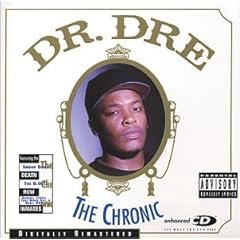
In 1993, I was working at Blockbuster Music, the now non-existent record store that was started by Blockbuster Video in the early '90s. I worked with this guy named Mitch Davis, who at the time must have been around 30 years old - I was maybe 20 at the time. Mitch was from one of the inner city Houston neighborhoods, sported a huge afro, and was one of the coolest and smartest dudes I have ever met. The guy had no formal music education, but knew more about music than most music professors I've known over the years. He was especially knowledgeable about jazz, soul, funk and rap/hip-hop, and as I knew next to nothing about any of these genres at the time, he was truly one of my first professors of music, and I really looked up to him. I learned from Mitch many, many things, but most importantly that you didn't need a degree in music to really know music.
One of the albums that Mitch introduced me to was The Chronic by Dr. Dre. Hearing Mitch talk intelligently about rap, and how this album represented real frustrations and issues that existed in the ghettos opened my eyes to rap as serious American art. It was a world that was totally foreign to me, but one that Mitch grew up in. He introduced me to many other great artists - Miles Davis and John Coltrane - Erykah Badu and Me'Shell Ndegeocello - and many others. But I think The Chronic had the biggest impact on me. I have no idea what ever happened to Mitch, but I hope I can re-connect with him someday.
AUDIO: DR. DRE - A NIGGA WITTA GUN (small warning - probably don't want the kids to hear this one)
9) FRANK ZAPPA - HOT RATS

Probably about a year later, while still working at the record store, my musical curiosity was in full bloom. Blockbuster Music's gimmick was that you could come into the store a literally pull any CD off the shelf, bring it to the "listening station" and listen to it. I was taking full advantage of this and devouring music on a daily basis. I kept hearing things about Frank Zappa, and I would see his records all the time in the store, but I hadn't ventured there yet - not sure what was holding me back. Finally, my curiosity gave way, and I picked up one random album and brought it up to the listening booth, where I believe Mitch opened and played the CD for me.
I was sitting there with my headphones on when the first track Peaches En Regalia came on. From the first ten seconds I was like "What the hell IS this???" - but in a good way - lol. It was another one of those moments when I was completely blown away by a sound I'd never heard before. It was like rock and classical and jazz and something unnameably weird all rolled into one. After listening to the first track, I remember looking at Mitch with a stunned look on my face, uttering an expletive, and knowing that I would be a Zappa fan from then on. Mitch just smiled back at me with a look on his face that said "I knew you'd like that." The rest of the album was just as strange and wonderful, and Zappa's guitar soloing style is utterly unique - no one else sounds like he does.
I would later discover many great Zappa albums, including Apostrophe and One Size Fits All, which contains the song Inca Roads that I based my own piece Hommage a Frank Zappa on. Even later I would keep discovering music from this genius - classical music albums like The Yellow Shark and Civilization, Phase Three.
AUDIO: FRANK ZAPPA, PEACHES EN REGALIA
10) STEVE REICH/PAT METHENY - ELECTRIC COUNTERPOINT
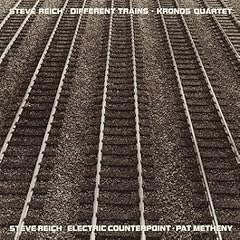
I think just before I went off to music school in 1996, I discovered Electric Counterpoint by Steve Reich. I was listening to more and more classical music at the time, and was going through every album by the Kronos Quartet I could find. I initially picked this one up because one of the pieces, Different Trains, was performed by Kronos. The other piece on the CD Electric Counterpoint was performed by the jazz guitarist Pat Metheny. I had heard of Metheny, but had never heard any of his music at this time. I had no idea what to expect of this piece - a piece of classical music for electric guitar?? And not just for electric guitar, but 13 electric guitars all layered on top of each other.
This was my first introduction to "minimalist" music, and the rhythms and harmonies were so close to the music I was already used to, I immediately identified with it. I thought the sound of all those guitars woven together like threads in a tapestry was fascinating, and I loved the groove of the third movement. This is the piece that made me realize that classical music and pop/rock music didn't have to be these two completely separated worlds. They could co-exist together. I have since performed this piece myself, and I love it to death. Steve Reich has also become one of my favorite composers, period.
AUDIO: PAT METHENY: STEVE REICH, ELECTRIC COUNTERPOINT, III.
Sunday, March 01, 2009
15 albums that changed your life (1-5)
There's been a "note" going around Facebook for a few months now that contains the following tag line:
"Think of 15 albums, CDs, LPs that had such a profound effect on you they changed your life. Dig into your soul. Music that brought you to life when you heard it. Literally socked you in the gut. Then when you finish, tag 15 others (or more!), including moi. Make sure you copy and paste this part so they know the drill."
I thought instead of doing it as a Facebook note, I would do it as a more extensive blog. As with many of my other musician friends that have done this on Facebook, I feel the need to add the disclaimer that I found it near impossible to narrow the list down to a mere 15, so many fine albums have been left out, but the thing is to present 15, so I have. I have also done my best to put these in some kind of auto-biographical order.
1) VAN HALEN - 1984

Van Halen's 1984 was absolutely the first album to make a real musical impact on me. I was 11 years old when the album was released, and I still remember seeing the record at Sears, where my father worked at the time.
Everyone was of course in love with this album at the time - it was beyond huge. For me though, I was just captivated by Eddie Van Halen's guitar playing. I also clearly remember listening to the tape on my Walkman in my Dad's chair at home one afternoon, and Hot for Teacher came on. I remember listening to Eddie's opening solo, and thinking to myself, "I want to be able to play that." It was in that moment that I decided to learn how to play the guitar.
AUDIO - HOT FOR TEACHER:
2) BEASTIE BOYS - LICENSED TO ILL

I was in 8th grade at Dueitt Middle School when the Beastie Boys first album, Licensed to Ill was released. I was the perfect age, and had the perfect mix of raging hormones for this album to make an impact on me. On top of that, this was my first concert ever. I saw the Beasties during the Spring of my 8th grade year at the Summit in Houston, which I find totally incomprehensible that this place that I saw the Beastie boys, and later, Metallica, Megadeth, Iron Maiden, Anthrax, Slayer, Suicidal Tendencies, Ozzy Osbourne, and even Andrew "Dice" Clay, is now the nations largest mega-church.
Anyway, the Beastie Boys mix of juvenile rap and metal set the tone for my high school years as an aspiring metal punk. I think I started to appreciate the rhythmic intricacies of rap and also opened the door for metal to invade my life, which I believe opened the door for classical music to invade my life. There has even been a study to prove this fact - read about it HERE.
VIDEO: FIGHT FOR YOUR RIGHT TO PARTY (embedding was disabled - WTH??)
3) OZZY OSBOURNE - BLIZZARD OF OZZ

Around the same time that I discovered the Beastie boys, I also discovered Ozzy Osbourne, and possibly even just as importantly, his guitarist Randy Rhoads.
For me, there wasn't a bad song on this whole album, and I still think the guitar solo for Mr. Crowley is one of the greatest rock guitar solos ever. Also, probably the first "classical" guitar piece I ever heard was Randy's Dee - a piece for solo classical guitar that he composed in hommage to his mother, who apparently taught him everything he knew about music. The fact that he had this beautiful little piece, probably showed it to Ozzy one day, and despite Ozzy making a dark metal album, was like, "That's f*#c@n great man, let's put it on the album!" makes me love this record even more. I looked at Randy Rhoads as a model when I was in high school. This guy, who was a great player, but also a great musician who studied music, knew music theory, and studied other disciplines of guitar playing. He was the closest thing to a music scholar that I had found at the time, and I still respect the hell out of the guy.
VIDEO: MR. CROWLEY (I love how Ozzy just kind of stands there at the end looking sort of amused and confused - hilarious)
4) RUSH - MOVING PICTURES

When I was a freshman in high school, I discovered Moving Pictures when I heard Tom Sawyer on the radio for the first time. This was my first introduction to "progressive" rock, or prog-rock. Even though Moving Pictures is one of Rush's most straight forward rock albums, it introduced me to the genre and to Rush's music. Through Rush, I was introduced to more advanced musical concepts that I would take with me into my study and creation of classical music. Things like odd time signatures (like the 7/8 time used in Tom Sawyer for example), to extended, almost opera-like musical forms (as in their concept album, 2112), to their use of unusual (for rock music) intervals, such as the prominent tri-tone in YYZ (not to mention the use of the morse code for yyz as the opening rhythm), to their thoughtful virtuosity. Even Neil Peart's live drum solo from the same period introduced me to many kinds of orchestral percussion that I had never seen before. I branched out from Rush into a whole list of other prog-rock bands, including Yes, King Crimson, Pink Floyd, Emerson, Lake & Palmer and Dream Theater to name a few, but Rush was always my favorite.
AUDIO: TOM SAWYER
5) METALLICA - ...AND JUSTICE FOR ALL

Around 1988 when And Justice for All came out, I would look forward to Saturday night all week for one reason - Headbanger's Ball on MTV. I had just started to take interest in this kind of music, and had just started watching Headbanger's Ball when one Saturday, I caught the world premier of Metallica's first music video for their song One. I had of course heard of Metallica before, but never gave them much thought, because that was stoner music - not something I would be interested in. But, I watched the video all the same, and I was simply blown away by it. I had never seen or heard anything like it. It was totally raw and powerful to me. Seeing their intensity while playing, Lars Ulrich's facial expressions looked like he was going medieval on his drum set, and the sheer virtuosity of James Hetfield and Kirk Hammett on their guitars. I mean, say what you will about heavy metal music, whether you love it or hate it, but no one can deny that these guys can f*$@ing play their instruments.
The songs on And Justice for All also brought me one step closer to discovering classical music. They were of epic length and complexity, and filled with new ideas and nuance that I would discover with every listen. From here I would go back and discover their absolute masterpiece Master of Puppets, but this is where I started with Metallica, and I still love this album.
VIDEO: METALLICA, ONE
Tune in tomorrow for albums 6-10!!!
"Think of 15 albums, CDs, LPs that had such a profound effect on you they changed your life. Dig into your soul. Music that brought you to life when you heard it. Literally socked you in the gut. Then when you finish, tag 15 others (or more!), including moi. Make sure you copy and paste this part so they know the drill."
I thought instead of doing it as a Facebook note, I would do it as a more extensive blog. As with many of my other musician friends that have done this on Facebook, I feel the need to add the disclaimer that I found it near impossible to narrow the list down to a mere 15, so many fine albums have been left out, but the thing is to present 15, so I have. I have also done my best to put these in some kind of auto-biographical order.
1) VAN HALEN - 1984
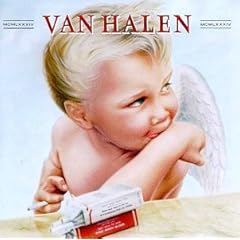
Van Halen's 1984 was absolutely the first album to make a real musical impact on me. I was 11 years old when the album was released, and I still remember seeing the record at Sears, where my father worked at the time.
Everyone was of course in love with this album at the time - it was beyond huge. For me though, I was just captivated by Eddie Van Halen's guitar playing. I also clearly remember listening to the tape on my Walkman in my Dad's chair at home one afternoon, and Hot for Teacher came on. I remember listening to Eddie's opening solo, and thinking to myself, "I want to be able to play that." It was in that moment that I decided to learn how to play the guitar.
AUDIO - HOT FOR TEACHER:
2) BEASTIE BOYS - LICENSED TO ILL

I was in 8th grade at Dueitt Middle School when the Beastie Boys first album, Licensed to Ill was released. I was the perfect age, and had the perfect mix of raging hormones for this album to make an impact on me. On top of that, this was my first concert ever. I saw the Beasties during the Spring of my 8th grade year at the Summit in Houston, which I find totally incomprehensible that this place that I saw the Beastie boys, and later, Metallica, Megadeth, Iron Maiden, Anthrax, Slayer, Suicidal Tendencies, Ozzy Osbourne, and even Andrew "Dice" Clay, is now the nations largest mega-church.
Anyway, the Beastie Boys mix of juvenile rap and metal set the tone for my high school years as an aspiring metal punk. I think I started to appreciate the rhythmic intricacies of rap and also opened the door for metal to invade my life, which I believe opened the door for classical music to invade my life. There has even been a study to prove this fact - read about it HERE.
VIDEO: FIGHT FOR YOUR RIGHT TO PARTY (embedding was disabled - WTH??)
3) OZZY OSBOURNE - BLIZZARD OF OZZ

Around the same time that I discovered the Beastie boys, I also discovered Ozzy Osbourne, and possibly even just as importantly, his guitarist Randy Rhoads.
For me, there wasn't a bad song on this whole album, and I still think the guitar solo for Mr. Crowley is one of the greatest rock guitar solos ever. Also, probably the first "classical" guitar piece I ever heard was Randy's Dee - a piece for solo classical guitar that he composed in hommage to his mother, who apparently taught him everything he knew about music. The fact that he had this beautiful little piece, probably showed it to Ozzy one day, and despite Ozzy making a dark metal album, was like, "That's f*#c@n great man, let's put it on the album!" makes me love this record even more. I looked at Randy Rhoads as a model when I was in high school. This guy, who was a great player, but also a great musician who studied music, knew music theory, and studied other disciplines of guitar playing. He was the closest thing to a music scholar that I had found at the time, and I still respect the hell out of the guy.
VIDEO: MR. CROWLEY (I love how Ozzy just kind of stands there at the end looking sort of amused and confused - hilarious)
4) RUSH - MOVING PICTURES
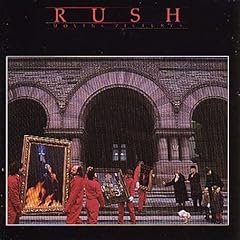
When I was a freshman in high school, I discovered Moving Pictures when I heard Tom Sawyer on the radio for the first time. This was my first introduction to "progressive" rock, or prog-rock. Even though Moving Pictures is one of Rush's most straight forward rock albums, it introduced me to the genre and to Rush's music. Through Rush, I was introduced to more advanced musical concepts that I would take with me into my study and creation of classical music. Things like odd time signatures (like the 7/8 time used in Tom Sawyer for example), to extended, almost opera-like musical forms (as in their concept album, 2112), to their use of unusual (for rock music) intervals, such as the prominent tri-tone in YYZ (not to mention the use of the morse code for yyz as the opening rhythm), to their thoughtful virtuosity. Even Neil Peart's live drum solo from the same period introduced me to many kinds of orchestral percussion that I had never seen before. I branched out from Rush into a whole list of other prog-rock bands, including Yes, King Crimson, Pink Floyd, Emerson, Lake & Palmer and Dream Theater to name a few, but Rush was always my favorite.
AUDIO: TOM SAWYER
5) METALLICA - ...AND JUSTICE FOR ALL

Around 1988 when And Justice for All came out, I would look forward to Saturday night all week for one reason - Headbanger's Ball on MTV. I had just started to take interest in this kind of music, and had just started watching Headbanger's Ball when one Saturday, I caught the world premier of Metallica's first music video for their song One. I had of course heard of Metallica before, but never gave them much thought, because that was stoner music - not something I would be interested in. But, I watched the video all the same, and I was simply blown away by it. I had never seen or heard anything like it. It was totally raw and powerful to me. Seeing their intensity while playing, Lars Ulrich's facial expressions looked like he was going medieval on his drum set, and the sheer virtuosity of James Hetfield and Kirk Hammett on their guitars. I mean, say what you will about heavy metal music, whether you love it or hate it, but no one can deny that these guys can f*$@ing play their instruments.
The songs on And Justice for All also brought me one step closer to discovering classical music. They were of epic length and complexity, and filled with new ideas and nuance that I would discover with every listen. From here I would go back and discover their absolute masterpiece Master of Puppets, but this is where I started with Metallica, and I still love this album.
VIDEO: METALLICA, ONE
Tune in tomorrow for albums 6-10!!!
Friday, February 27, 2009
Duo 46 concert online

I just found a concert of the guitar/violin duo Duo 46 online. It's a concert they played in Calgary at St. Stephen's Anglican Church on April 5th, 2008, and is presented on the Canadian Broadcasting Corporations web site. You can listen to the entire concert online for free, and I have to say they played my piece particularly well. I also really enjoy the pieces by Beaser, Liderman and John Oliver.
I met guitarist Matthew Gould and violinist Beth Schneider when I was a student at the University of Texas in 1997. I wrote Sonata 46 for them in 1998, and they've since played it so much and in so many places, I've totally lost track of it. They've had to have played it at least 50 times, which blows my mind.
You can check it out here:
http://www.cbc.ca/radio2/cod/concerts/20080405duo46
Friday, February 20, 2009
Composers: Carlos Rafael Rivera
I thought I would start a new series of blogs about composers that I respect, and whos music I think is shaping the classical music of the 21st century. I'll be doing this by telling you about how I discovered their music, and how they personally affected me in the beginning. I'll be introducing you to some of their work, and pointing you to where you can find more, so you can discover them for yourselves.
I was introduced to Carlos Rafael Rivera's music back in 1998, when I was a student at the University of Texas studying classical guitar with Adam Holzman. Every Wednesday afternoon, all the guitarists in his studio would attend "rep. class". This was a kind of master class, where various people would play whatever pieces they were working on in front of everyone, and Adam would comment (or yell - lol).
One big part of a classical guitar student's year is the Guitar Foundation of America's annual international guitar competition and convention. Winning the competition usually means the start of a real concert career for the guitarist, so it's taken very seriously by anyone who wants to become a professional classical guitarist.
Every year, the GFA releases a list of required pieces that all participants must master, and perform at the competition. This year for example, the required piece - referred to as the "set piece", is Astor Piazzolla's "Compadre" from his work Cinco Piezas. The set piece usually comprises some kind of work that is standard to the classical guitar repertory, and contains techniques that the GFA feels every classical guitarist should be able to execute.
So, what does the GFA competition and set pieces have to do with Carlos Rafael Rivera?
Before 1999, part of the GFA competition was their annual competition for composers of guitar music. The composers would submit their pieces, and the piece would be judged by a panel of guitarists and representatives from the GFA. The winning piece would not only be published, but would be the second set piece that every guitarist was required to play in the competition. Unfortunately, in 1997, the GFA lost its resolve for the program, and announced that 1998 would be the final year for the composition competition.
I believe that this decision was made partly because of most of the music that won and became set pieces over the years. I remember sitting in rep class, week after week, listening to the guitar students that were preparing for the competition play these pieces over and over again. And to be completely honest, most of these pieces were downright horrible. I will never forget the winning piece from the 1997 competition. I don't remember the composer, but the piece was called EtuDE - yes, those last 2 letters were capitalized. It was this long, naively atonal work, with the distinguishing feature of having the guitarist stop in the middle of the piece, and sing "DEEEEEEEE!!!!!" on the pitch D, and then continue with the aimless atonal music. It was ridiculous, and hilarious at the same time - but can you imagine being a judge at the 1997 GFA competition and having to listen to hundreds of guitarists yell "DEEEEEEE!!!!" for 3 days in a row?? So, with many debacles of music like this one, the GFA decided to cancel the composers program, and that 1998 would be the final year.
Of course, irony was in full swing, and sure enough, in 1998, they got their best piece ever. It was a piece of music by then student, Carlos Rafael Rivera called Whirler of the Dance. As in years past, I heard several guitarists in rep class play Whirler of the Dance week in and week out, and the piece got better every time I heard it. I think everyone was in agreement that this was a great piece, and now instead of people feeling kind of relieved the composer project was going away, I think Carlos actually made them start to regret canceling it (although the GFA has never resurrected the program).
The winner of the competition that year was the great Serbian guitarist Denis Azabagic, who was a mere student himself then, but is now recognized as one of the best out there. Here is video of Denis performing all three movements of Whirler of the Dance:
I: Prelude
II: Evocation
III: Dance
Since then, Denis has developed a great relationship with Carlos and has commissioned other work from him and professionally recorded and released his music.
You can find other music by Carlos on iTunes, including his piece La Maja y el Hechicero written for Azabagic's flute and guitar duo, Cavatina Duo. Actually, you can download this for FREE on iTunes, as well as the Cavatina Duo's entire concert, so you have no excuse for not checking it out!! hehe
I was introduced to Carlos Rafael Rivera's music back in 1998, when I was a student at the University of Texas studying classical guitar with Adam Holzman. Every Wednesday afternoon, all the guitarists in his studio would attend "rep. class". This was a kind of master class, where various people would play whatever pieces they were working on in front of everyone, and Adam would comment (or yell - lol).
One big part of a classical guitar student's year is the Guitar Foundation of America's annual international guitar competition and convention. Winning the competition usually means the start of a real concert career for the guitarist, so it's taken very seriously by anyone who wants to become a professional classical guitarist.
Every year, the GFA releases a list of required pieces that all participants must master, and perform at the competition. This year for example, the required piece - referred to as the "set piece", is Astor Piazzolla's "Compadre" from his work Cinco Piezas. The set piece usually comprises some kind of work that is standard to the classical guitar repertory, and contains techniques that the GFA feels every classical guitarist should be able to execute.
So, what does the GFA competition and set pieces have to do with Carlos Rafael Rivera?
Before 1999, part of the GFA competition was their annual competition for composers of guitar music. The composers would submit their pieces, and the piece would be judged by a panel of guitarists and representatives from the GFA. The winning piece would not only be published, but would be the second set piece that every guitarist was required to play in the competition. Unfortunately, in 1997, the GFA lost its resolve for the program, and announced that 1998 would be the final year for the composition competition.
I believe that this decision was made partly because of most of the music that won and became set pieces over the years. I remember sitting in rep class, week after week, listening to the guitar students that were preparing for the competition play these pieces over and over again. And to be completely honest, most of these pieces were downright horrible. I will never forget the winning piece from the 1997 competition. I don't remember the composer, but the piece was called EtuDE - yes, those last 2 letters were capitalized. It was this long, naively atonal work, with the distinguishing feature of having the guitarist stop in the middle of the piece, and sing "DEEEEEEEE!!!!!" on the pitch D, and then continue with the aimless atonal music. It was ridiculous, and hilarious at the same time - but can you imagine being a judge at the 1997 GFA competition and having to listen to hundreds of guitarists yell "DEEEEEEE!!!!" for 3 days in a row?? So, with many debacles of music like this one, the GFA decided to cancel the composers program, and that 1998 would be the final year.
Of course, irony was in full swing, and sure enough, in 1998, they got their best piece ever. It was a piece of music by then student, Carlos Rafael Rivera called Whirler of the Dance. As in years past, I heard several guitarists in rep class play Whirler of the Dance week in and week out, and the piece got better every time I heard it. I think everyone was in agreement that this was a great piece, and now instead of people feeling kind of relieved the composer project was going away, I think Carlos actually made them start to regret canceling it (although the GFA has never resurrected the program).
The winner of the competition that year was the great Serbian guitarist Denis Azabagic, who was a mere student himself then, but is now recognized as one of the best out there. Here is video of Denis performing all three movements of Whirler of the Dance:
I: Prelude
II: Evocation
III: Dance
Since then, Denis has developed a great relationship with Carlos and has commissioned other work from him and professionally recorded and released his music.
You can find other music by Carlos on iTunes, including his piece La Maja y el Hechicero written for Azabagic's flute and guitar duo, Cavatina Duo. Actually, you can download this for FREE on iTunes, as well as the Cavatina Duo's entire concert, so you have no excuse for not checking it out!! hehe
Thursday, February 19, 2009
Sur Incises
I came across this You Tube video of Pierre Boulez doing a kind of presentation of parts of his piece Sur Incises. It reminded me how much I love this piece. The audio quality of the You Tube video does not really do it justice, but I thought I would post it anyway.
The ensemble is very unique - 3 pianos, 3 harps and 3 percussionists (usually playing vibraphones). The combined sound is something so wonderful - a white crystalline sound world, sometimes shimmering with an ethereal beauty, other times pulsing with brutal primal rhythms.
I would highly recommend checking out the real recording, but even that cannot match how this piece sounds when heard live - it's amazing. To hear this huge collection of big strings (in the pianos and harps) and the aluminum bars of the vibraphones in the air of the hall - you can feel the air vibrating all around you, even in the quietest moments.
The ensemble is very unique - 3 pianos, 3 harps and 3 percussionists (usually playing vibraphones). The combined sound is something so wonderful - a white crystalline sound world, sometimes shimmering with an ethereal beauty, other times pulsing with brutal primal rhythms.
I would highly recommend checking out the real recording, but even that cannot match how this piece sounds when heard live - it's amazing. To hear this huge collection of big strings (in the pianos and harps) and the aluminum bars of the vibraphones in the air of the hall - you can feel the air vibrating all around you, even in the quietest moments.
Monday, February 09, 2009
Surfin with the Plagiarist
I just heard today about the controversy surrounding the band Coldplay and the guitarist Joe Satriani. A friend of mine posted a status update on Facebook congratulating Satriani on winning the Grammy for Song of the Year. Being a guitar child of the 80's, I was shocked and kind of elated at the prospect of Joe Satriani winning song of the year in 2009. However, it was explained to me that Satriani is suing Coldplay for plagiarizing their song "Viva la Vida" from Satriani's "If I Could Fly". I was linked to a really great, in-depth analysis of the two tunes done by guitarist Andrew Wasson, and I think Coldplay is in big trouble. If there is any justice, Satriani will win his lawsuit hands down. Here are the videos Andrew posted.
Sunday, February 08, 2009
A few things that never got posted here...
The first thing was an announcement of an article that I appeared in:
There's a new feature in the classical guitar magazine Soundboard this month (Volume 33, 2007). The magazine is published by the Guitar Foundation of America. There is a little about me, and they have also published my first guitar etude. Classical guitarists - please check it out!

Audio: Etude No. 1 for Classical Guitar:
The second was a fantastic review I recieved:
Music Review
il dolce stile nuovo for violin, cello, and piano by Anthony Joseph Lanman.
©2001 Anthony Joseph Lanman
http://www.myspace.com/anthonyjosephlanman
The second time I heard this work was in a car driving up to Crater Lake in Oregon. Already familiar with the piece as the lake came in sight for the first time, the fabulous glacial morning blue color of the lake blended with the sonorous cadences of the main section of il dolce stile nuovo and created for me one of those priceless moments where music and Nature unite.
As a composer, I am jealous of this work. Jealous perhaps in the best sense, in that I admire the technique and spirit that created it. Mr. Lanman states in the score that he was influenced by composers and musicians as diverse as Perotin, Corelli, Bach, Schoenberg, and the band Metallica. However, this diversity of inputs yields a most consistent output. This is not music of collage or pastiche, but a heartfelt and wholly unified work.
The piece revels in seeming contradictions, yet comes out more unified than most. Pop syncopations of the most sophisticated kind make the piece rock, while the ecstatic refinements of the main A sections put the work in a realm somewhere between the exquisiteness of Ravel and the ecstasies of Scriabin. Lanman combines the "rock" and "exquisite ecstasies" with complete success, to create a whole I have never experienced before, one which puts me in a unique--and marvelous--place. This is a composer who not only thoroughly understands the musical language he has chosen for the piece, but he also feels that language in a fundamental way that makes this music an intellectual, yet above all thoroughly visceral, experience. The music is also completely idiomatic to his modal language in melody, harmony, and rhythm. It is through his heartfelt instincts, and not random experiments in sound, that Lanman has come up with something genuinely "nuovo" in this work.
In this work, writing for all instruments is fascinating and varied. The improvisatory B section contrasts strongly with the flanking A sections, and allows the violin a carefully controlled chance to sound like a distorting electric guitar by using vibrato from tasto to sul. ponticello positions on the fingerboard. The piano contrasts long-held pedal passages with lengthy toccata-like passages where use of the pedal is minimized. The instrumental writing throughout is genuinely hypnotic, again in the best sense.
Lanman's contrapuntal sensibilities, especially with regard to harmonic and rhythmic textures, show a sophistication which allows each line to be clearly heard, yet form a whole where each segment of the harmony is completely natural to the piece and not an artificial result of combined counterpoint. Rhythms, while often quite complex are never deliberately so, and only add to the dramatic tension.
Mr. Lanman's self-published manuscripts are a joy to behold in an era where many major publishers do it "on the cheap", and a separate small study score and recording accompany his amply sized performance editions.
il dolce stile nuovo was the winner of the 2002 ASCAP/Morton Gould Young Composer Award. Gregory Hall
(this is a forthcoming review, to be published in the Contemporary Recording Society's "CRS Society News" bulletin.)
Audio: il dolce stile nuovo
There's a new feature in the classical guitar magazine Soundboard this month (Volume 33, 2007). The magazine is published by the Guitar Foundation of America. There is a little about me, and they have also published my first guitar etude. Classical guitarists - please check it out!
Audio: Etude No. 1 for Classical Guitar:
The second was a fantastic review I recieved:
Music Review
il dolce stile nuovo for violin, cello, and piano by Anthony Joseph Lanman.
©2001 Anthony Joseph Lanman
http://www.myspace.com/anthonyjosephlanman
The second time I heard this work was in a car driving up to Crater Lake in Oregon. Already familiar with the piece as the lake came in sight for the first time, the fabulous glacial morning blue color of the lake blended with the sonorous cadences of the main section of il dolce stile nuovo and created for me one of those priceless moments where music and Nature unite.
As a composer, I am jealous of this work. Jealous perhaps in the best sense, in that I admire the technique and spirit that created it. Mr. Lanman states in the score that he was influenced by composers and musicians as diverse as Perotin, Corelli, Bach, Schoenberg, and the band Metallica. However, this diversity of inputs yields a most consistent output. This is not music of collage or pastiche, but a heartfelt and wholly unified work.
The piece revels in seeming contradictions, yet comes out more unified than most. Pop syncopations of the most sophisticated kind make the piece rock, while the ecstatic refinements of the main A sections put the work in a realm somewhere between the exquisiteness of Ravel and the ecstasies of Scriabin. Lanman combines the "rock" and "exquisite ecstasies" with complete success, to create a whole I have never experienced before, one which puts me in a unique--and marvelous--place. This is a composer who not only thoroughly understands the musical language he has chosen for the piece, but he also feels that language in a fundamental way that makes this music an intellectual, yet above all thoroughly visceral, experience. The music is also completely idiomatic to his modal language in melody, harmony, and rhythm. It is through his heartfelt instincts, and not random experiments in sound, that Lanman has come up with something genuinely "nuovo" in this work.
In this work, writing for all instruments is fascinating and varied. The improvisatory B section contrasts strongly with the flanking A sections, and allows the violin a carefully controlled chance to sound like a distorting electric guitar by using vibrato from tasto to sul. ponticello positions on the fingerboard. The piano contrasts long-held pedal passages with lengthy toccata-like passages where use of the pedal is minimized. The instrumental writing throughout is genuinely hypnotic, again in the best sense.
Lanman's contrapuntal sensibilities, especially with regard to harmonic and rhythmic textures, show a sophistication which allows each line to be clearly heard, yet form a whole where each segment of the harmony is completely natural to the piece and not an artificial result of combined counterpoint. Rhythms, while often quite complex are never deliberately so, and only add to the dramatic tension.
Mr. Lanman's self-published manuscripts are a joy to behold in an era where many major publishers do it "on the cheap", and a separate small study score and recording accompany his amply sized performance editions.
il dolce stile nuovo was the winner of the 2002 ASCAP/Morton Gould Young Composer Award. Gregory Hall
(this is a forthcoming review, to be published in the Contemporary Recording Society's "CRS Society News" bulletin.)
Audio: il dolce stile nuovo
Friday, February 06, 2009
Juventas
Juventas, a young new music ensemble based in Boston, is once again performing one of my pieces. This group of talented performers and composers have been very good to me and my music, having performed il dolce stile nuovo and Sonata 46 in the past. This time, they will be performing my fast and furious flute and piano duo Cerulean Soliloquy. Performances will take place on Saturday, February 28 at 8pm at The Boston Conservatory's Seully Hall and Monday, March 3 at 7:30pm at Eastern Nazarene College's Musica Eclectica Concert Series in Quincy, MA.
Audio: Cerulean Soliloquy
Audio: Cerulean Soliloquy
Thursday, February 05, 2009
Blizzard in Trouble?
Many of you who know me well well know that I am a huge nerd. One of the nerdy things I love, and have always loved is video games. Even as a kid, I would spend hours programming games in BASIC on my TI99/4A computer, and then leave the computer on all night because, as I never had a hard drive, as soon as I shut the computer off, the game would be gone. Before that I had the Atari 2600 - after the TI99 I had a Commodore 64, then an Amiga and finally a PC - all of these systems were for one primary purpose - playing games.
My life obviously took a different turn as a musician and composer, but I still have a passion for games, my current passion being World of Warcraft, the MMORPG (and for those not hip enough to know, that means Massively Multiplayer Online Role-Playing Game - gah) that was developed by Blizzard Entertainment and released in November, 2004.
I've always had great respect for Blizzards games ever since I played the first Warcraft RTS (Real Time Strategy) back in 1994. Every game that followed was simply the best game for that particular genre of games on the market. Every aspect of the games were awe-inspiringly great. I think even the first game music that I really thought was great was the music for Diablo II.
But the one, single aspect of Blizzard that I have always been most impressed with was simply their working philosophy, it's not done until it's done. While every other game company out there had hard deadlines for its programmers, often resulting in sub-par or even broken games, Blizzard sometimes took years to develop a single game, and stood by their stance, insisting that the game would be worth the wait - and they were always right.
When World of Warcraft was released in November, 2004, I was one of the first in line to play, and as usual, I was not dissapointed. In fact, Blizzard had once again outdone themselves - the game was incredible. I've pretty much only played WoW since then - a record breaking 4 1/2 years - longer than I've played any other single game, and my faith in Blizzard has never wavered, until now. Allow me to digress into another example to illustrate my current worries.
MP3.COM
I'm not sure many of you remember the original MP3.Com. In it's current incarnation, it's basically an online music store, similar to sites like Napster.com or iTunes. When it was founded in 1997 however, the site was exclusively for independent artists to post their music. They had the option to offer free downloads, or to stream the music and sell CDs, which MP3.Com would manufacture.
I was one of the first composers to post my music on MP3.Com in 1997, and even though I was just starting out, still an undergraduate in college at the time, I started to gain a small fan base for my music. Incredibly, MP3.Com established a program where they actually paid the artists on the site based on how many downloads you were getting. I would say that over the course of about 4 months, I was paid around $2500.00. Needless to say, MP3.Com was an incredible outlet for independent artists, and it was clear that the owners of the site truly did care about the independent artist and wanted to see them succeed.
But, as with most great things, it didn't last. In 2001, MP3.Com was bought by the huge conglomerate Vivendi Universal. From the moment Vivendi took over, things started to change. For one, the artist pay-out program was stopped immediately - can't have those dead-beat artists making too much money! Then, in an attempt to generate more revenue, they started to split the artist pages (which originally was just one simple page per artist) into multiple pages per artist, so they could generate more ad space, and sure enough, more and more ads started to show up all over the site (WoW players - is this starting to sound familiar?). The site started to cater more and more to major label acts, making the transition to what the site is now. With added pages, and more advertising, the site gradually became unwieldy and belabored for the user to navigate. In 2003, Vivendi dumped the site off to CNET, and CNET promptly killed the site in December of 2003, re-opening it in it's current state.
Blizzard and World of Warcraft
Blizzard to me has always been like the original MP3.Com was - uncompromising and more concerned with putting out the best product out there than with trying to make loads of fast money. They were independently owned, and operated on their own terms, which is the main reason they are what they are today.
However, like MP3.Com, Blizzard was eventually bought out by, once again, Vivendi Universal. Given my personal history with MP3.Com, I was very worried by this news. Blizzard assured their many fans that the sell-off would not in any way affect how Blizzard does business or how it makes its games. Everything would continue as it had. I have to also say that this was almost a direct quote from when Vivendi initially took over MP3.Com - chillingly close.
In 2007, Vivendi games merged with Activision, and created Activision Blizzard - a huge conglomerate of video game developers. All together, this conglomerate owns many of the top video games on the market today, including World of Warcraft and Guitar Hero to name just a few. Again, we were told not to worry - that nothing at Blizzard would change - right.
With the release in November of last year of World of Warcraft's second expansion, Wrath of the Lich King, I was already starting to suspect change at Blizzard. Right away, I could see that many aspect of the expansion were unfinished - one look at any crafting profession in the game could tell you this. Also, the only large, multiple-boss dungeon that was (and still is) available was one that essentially already existed from the original game, but had been re-tooled for Wrath. Compare this to the first expansion, which featured two large, multi-boss raid dungeons (Karazhan and Serpent Shrine Cavern) and 2 "single boss" dungeons (Gruul's Lair and Magtheridon's Lair) from day one of the expansion - all completely new.
Still, Blizzard told us over and over, nothing's changed - it's still "not ready until it's ready."
Recently with the release of patch 3.0.8, it is becoming clear to me that things definitely are not the same at Blizzard. Things are clearly being released before they are ready, and I suspect that Blizzard is now being given hard deadlines by their Activision overlords. The expansion has been a series of one buggy patch after another, patch 3.0.8 being possibly the buggiest patch yet to be released, requiring multiple re-patches and hot fixes. The game itself is also laggy and choppy for many players, and I have heard reports (and have experienced it myself) of WoW overheating video cards, crashing unexpectedly, etc. Five years ago, these are things I would have never expected from Blizzard, but they are becoming more and more accepted by the player base, all while Ghostcrawler tells us nothing has changed - there's nothing to worry about.
In addition, like MP3.Com, ads are starting to pop up all over Blizzards site and forums, where there were never ads before. I also expect ads to start appearing on the game launcher very soon. With 12+ million subscribers at an average of $15 per month, does Blizzard really need additional revenue from advertising? It's not a huge deal - none of this is really yet - but they are all signs - signs that point in a disturbing direction.
This is what happens when large corporations take over smaller, independently owned businesses. The swoop in with their arrogance and "we know best" philosophy, and slowly the smaller company is made to tow the company line. I sincerely hope that the recent troubles are temporary, and that Blizzard is an exception, and that I'm totally wrong, but I have a feeling I'm not wrong. I've just not seen this issue discussed in the WoW community at all, and I think it should be discussed.
I still love WoW - I would go as far as to say that I think WoW is probably the greatest computer game ever made, and I hope it stays that way and is not run into the ground like MP3.Com was.
/end rant
My life obviously took a different turn as a musician and composer, but I still have a passion for games, my current passion being World of Warcraft, the MMORPG (and for those not hip enough to know, that means Massively Multiplayer Online Role-Playing Game - gah) that was developed by Blizzard Entertainment and released in November, 2004.
I've always had great respect for Blizzards games ever since I played the first Warcraft RTS (Real Time Strategy) back in 1994. Every game that followed was simply the best game for that particular genre of games on the market. Every aspect of the games were awe-inspiringly great. I think even the first game music that I really thought was great was the music for Diablo II.
But the one, single aspect of Blizzard that I have always been most impressed with was simply their working philosophy, it's not done until it's done. While every other game company out there had hard deadlines for its programmers, often resulting in sub-par or even broken games, Blizzard sometimes took years to develop a single game, and stood by their stance, insisting that the game would be worth the wait - and they were always right.
When World of Warcraft was released in November, 2004, I was one of the first in line to play, and as usual, I was not dissapointed. In fact, Blizzard had once again outdone themselves - the game was incredible. I've pretty much only played WoW since then - a record breaking 4 1/2 years - longer than I've played any other single game, and my faith in Blizzard has never wavered, until now. Allow me to digress into another example to illustrate my current worries.
MP3.COM
I'm not sure many of you remember the original MP3.Com. In it's current incarnation, it's basically an online music store, similar to sites like Napster.com or iTunes. When it was founded in 1997 however, the site was exclusively for independent artists to post their music. They had the option to offer free downloads, or to stream the music and sell CDs, which MP3.Com would manufacture.
I was one of the first composers to post my music on MP3.Com in 1997, and even though I was just starting out, still an undergraduate in college at the time, I started to gain a small fan base for my music. Incredibly, MP3.Com established a program where they actually paid the artists on the site based on how many downloads you were getting. I would say that over the course of about 4 months, I was paid around $2500.00. Needless to say, MP3.Com was an incredible outlet for independent artists, and it was clear that the owners of the site truly did care about the independent artist and wanted to see them succeed.
But, as with most great things, it didn't last. In 2001, MP3.Com was bought by the huge conglomerate Vivendi Universal. From the moment Vivendi took over, things started to change. For one, the artist pay-out program was stopped immediately - can't have those dead-beat artists making too much money! Then, in an attempt to generate more revenue, they started to split the artist pages (which originally was just one simple page per artist) into multiple pages per artist, so they could generate more ad space, and sure enough, more and more ads started to show up all over the site (WoW players - is this starting to sound familiar?). The site started to cater more and more to major label acts, making the transition to what the site is now. With added pages, and more advertising, the site gradually became unwieldy and belabored for the user to navigate. In 2003, Vivendi dumped the site off to CNET, and CNET promptly killed the site in December of 2003, re-opening it in it's current state.
Blizzard and World of Warcraft
Blizzard to me has always been like the original MP3.Com was - uncompromising and more concerned with putting out the best product out there than with trying to make loads of fast money. They were independently owned, and operated on their own terms, which is the main reason they are what they are today.
However, like MP3.Com, Blizzard was eventually bought out by, once again, Vivendi Universal. Given my personal history with MP3.Com, I was very worried by this news. Blizzard assured their many fans that the sell-off would not in any way affect how Blizzard does business or how it makes its games. Everything would continue as it had. I have to also say that this was almost a direct quote from when Vivendi initially took over MP3.Com - chillingly close.
In 2007, Vivendi games merged with Activision, and created Activision Blizzard - a huge conglomerate of video game developers. All together, this conglomerate owns many of the top video games on the market today, including World of Warcraft and Guitar Hero to name just a few. Again, we were told not to worry - that nothing at Blizzard would change - right.
With the release in November of last year of World of Warcraft's second expansion, Wrath of the Lich King, I was already starting to suspect change at Blizzard. Right away, I could see that many aspect of the expansion were unfinished - one look at any crafting profession in the game could tell you this. Also, the only large, multiple-boss dungeon that was (and still is) available was one that essentially already existed from the original game, but had been re-tooled for Wrath. Compare this to the first expansion, which featured two large, multi-boss raid dungeons (Karazhan and Serpent Shrine Cavern) and 2 "single boss" dungeons (Gruul's Lair and Magtheridon's Lair) from day one of the expansion - all completely new.
Still, Blizzard told us over and over, nothing's changed - it's still "not ready until it's ready."
Recently with the release of patch 3.0.8, it is becoming clear to me that things definitely are not the same at Blizzard. Things are clearly being released before they are ready, and I suspect that Blizzard is now being given hard deadlines by their Activision overlords. The expansion has been a series of one buggy patch after another, patch 3.0.8 being possibly the buggiest patch yet to be released, requiring multiple re-patches and hot fixes. The game itself is also laggy and choppy for many players, and I have heard reports (and have experienced it myself) of WoW overheating video cards, crashing unexpectedly, etc. Five years ago, these are things I would have never expected from Blizzard, but they are becoming more and more accepted by the player base, all while Ghostcrawler tells us nothing has changed - there's nothing to worry about.
In addition, like MP3.Com, ads are starting to pop up all over Blizzards site and forums, where there were never ads before. I also expect ads to start appearing on the game launcher very soon. With 12+ million subscribers at an average of $15 per month, does Blizzard really need additional revenue from advertising? It's not a huge deal - none of this is really yet - but they are all signs - signs that point in a disturbing direction.
This is what happens when large corporations take over smaller, independently owned businesses. The swoop in with their arrogance and "we know best" philosophy, and slowly the smaller company is made to tow the company line. I sincerely hope that the recent troubles are temporary, and that Blizzard is an exception, and that I'm totally wrong, but I have a feeling I'm not wrong. I've just not seen this issue discussed in the WoW community at all, and I think it should be discussed.
I still love WoW - I would go as far as to say that I think WoW is probably the greatest computer game ever made, and I hope it stays that way and is not run into the ground like MP3.Com was.
/end rant
Wednesday, February 04, 2009
Star Trek II: The Opera
This is genius...

I would totally go see this. Why is it that the one scene where Khan puts the slug things in their ears made the biggest impact on everyone who saw it?
I would totally go see this. Why is it that the one scene where Khan puts the slug things in their ears made the biggest impact on everyone who saw it?
Friday, August 15, 2008
Interview in Second Life
I just did an interview in Second Live, on the Music Academy OnLive show. You can download it as a podcast on iTunes - just search for "SLCN.TV - Music Academy", or see it at www.SLCN.tv. My portion of the interview starts about 25 min in. Check out the monocle!!!
Monday, June 11, 2007
Stop and Hear the Music
Here's an interesting commentary on the state of classical music today. It's a video of an experiment by one of the most famous classical violinists in the world, Joshua Bell, where he plays the Bach Chaconne from the solo violin Partita, BWV 1004 in a Washington D.C. subway station. I think the video pretty much speaks for itself.
http://www.youtube.com/watch?v=hnOPu0_YWhw
http://www.youtube.com/watch?v=hnOPu0_YWhw
Tuesday, May 22, 2007
Holy S*!t I Passed!
A few weeks ago, I traveled back up to Bloomington, Indiana to take my final Doctoral oral exam. This is the next-to-last step in completing my DM, in which I can use to teach music in a University, or become fry manager at Burger King (or, do a multitude of other things that I don't need a DM to do).
Anyway, for those of you that still have oral exams to take, I thought I would recount my exam as best I could, so you might have some idea of what to expect.
The most distressing thing about this exam is simply the unknown factor. In short, you have no idea what you're going to be asked. This is stressful. lol
The procedure for the exam is this:
1) You choose your committee - this is a panel of three professors of composition, and one, possible two of your minor field advisors. In my case, I had my music history minor field advisor as well as three composition profs - also the director of graduate studies sits in on every oral exam to observe.
2) You make your "repertoire list". This is a list of 12 pieces of music that you come up with, but that has to adhere to certain guidelines, and ultimately has to be approved by everyone on your committee. Some of the guidelines include: 6 pieces are pre-20th century, 3 are 1900-1949, 3 are 1950-present. Also, the 6 pre-20th century pieces have to be in separate genres, and the 6 post-19th century also have to be in separate genres. Those are the big ones - then there are other factors, which any prof. may object to at any time, in which case you have to go back and revise your list (which I had to do like 4 times), until they all can agree and approve it. If you missed my earlier blog, my list came out to be :
PRE-1900 WORKS
Giovanni Pierluigi da Palestrina (1525-1594) - Missa Papae Marcelli (1555)
genre: choral
John Dowland (1563-1626) - Lachrimae Pavanes (1604)
genre: chamber music
Claudio Monteverdi (1567-1643) - L'Orfeo (1607)
genre: opera
Johann Sebastian Bach (1685-1750) - Brandenburg Concerto No. 5 in D Major, BWV 1050 (1721)
genre: concerto
Ludwig Van Beethoven (1770-1827) - Symphony No. 7 in A Major (1813)
genre: symphony
Franz Liszt (1811-1886) - Piano Sonata in B Minor (1853)
genre: solo
1900-1949
Igor Stravinsky (1882-1971) - Les Noces (1917)
genre: ballet
Béla Bartók (1881-1945) - String Quartet No. 4 (1928)
genre: chamber music
Joaquin Rodrigo (1901-1999)- Concierto de Aranjuez (1939)
genre: concerto
1950-PRESENT
Benjamin Britten (1913-1976) - Death in Venice (1973)
genre: opera
Frederick Rzewski (b. 1938) - The People United Will Never Be Defeated! (1975)
genre: solo
Osvaldo Golijov (b. 1960) - La Pasión según San Marcos (2000)
genre: oratorio/choral
The purpose of creating this list is that you have something to actually study. However, you may or may not be asked anything about these pieces. During my exam, one professor didn't ask me anything about any of these pieces, so, you just never know - hence, the unknown factor. But, all you can do is study these pieces, and anything that could be tangentially related, and hope for the best. I can say that I was asked nothing about the Palestrina, the Dowland, Bach, Beethoven, or Liszt.
4) You set a date to take the exam.
My date was April 27th at 3:30 in the afternoon. After study in March, and intensive study in April, the day finally came - I'll try to generally recount the exam as best I can, but I'll probably forget a few questions.
The exam was held in this conference room in the Graduate office. There was a long conference table in the middle of the room, and I was seated at the head of the table, with the various profs. seated on the sides. A very intimidating position to be in for sure. We all gathered in the room, and they told me to wait outside before we got started. They talked to each other (I'm guessing coordinating their questions) for about 5 minutes, then invited me back in.
As soon as I sat down, Comp. prof. #1 fired away. His first question was, "As if you were teaching a beginning composition student who was having trouble setting text - show examples using the Monteverdi, the Stravinsky, the Britten, and the Golijov of how these composers make music from words - show different techniques from each piece."
After the main question is asked, it then kind of turns into a discussion of sorts - I start talking about examples from the pieces, and as I'm talking, my explanations could spark smaller questions from prof. #1, or even from any of the other profs sitting there. So, we actually talk about this question for about 15 minutes (they each get about 15-20 min each). Then, #1 pulled out the score to the Bartok and pointed to one natural harmonic in the cello, and asked, "What is the actual sounding pitch of this harmonic, and at what other location on the same string could it be fingered to produce the same pitch?" Sorry to all of you non-musicians out there that may be reading this - some of these questions are quite technical.
Prof. #2 started out with questions about the Rzewski. These were smaller, more direct questions than #1 asked - like, "Talk about the structure of the Rzewski - why are there 36 variations - does he use any extended piano techniques that also appear in any of the "Makrokosmos" of George Crumb, and what and where are they" - stuff like that. Then, he asked similar questions about the Rodrigo - short, pointed, very specific questions. He then asked a somewhat tangentially related question, which was "Name 5 American guitar concertos written in the last 25 years".
Prof. #3 asked nothing about any of the pieces on the list. The first thing he did was to put a sheet of blank staff paper in front of me, and said "please notate a nota cambiata". Now, it's been 7 years since I took 16th century counterpoint - I sort of remembered how a cambiata worked, but I was taking too long to figure it out, so he drew four ancient symbols (14th century) that indicated time (like a time signature) and asked me to indicate the modern time signature equivalents for them. Luckily, I knew this one and answered it no problem. Then he asked "Name three compositional techniques strongly associated with three LIVING composers that live outside of the United States". This one is pretty tough - I named lots of composers, but most of them either weren't original proponents of that technique, or they did that technique, but also did other things. I ended up getting two that were "acceptable" answers, and I guess that was good enough.
Now it was my Music History minor field advisors turn. He is not a composer, but a musicologist (a music historian) with a special focus in early baroque music - especially the music of Monteverdi. He pulled out about 5 pages of score from Orfeo (which was the central aria sung by Orfeo "Possente Spirito") and asked me LOTS of detailed questions about the score excerpt, what was going on at this time in the opera, about the instrumentation, performance practices, etc. He was very nice about it - a couple of times I got obviously stuck, and whenever this happened he would very kindly start to guide me toward the answer he wanted. After that, he pulled a page from the libretto of the Britten opera, and asked me more detailed questions about the section of libretto I was looking at, and about the opera at that point.
All this questioning took about an hour and 20 minutes. After, they told me to wait outside while they deliberated. There is no grade for this test, you simply pass it, or fail it. I waited outside for about 10 minutes - it was about the longest 10 minutes of my life.
They invited me back in, and congratulated me for passing. That was it - no talk about how I did or anything like that - just a handshake and a congratulations from each of them.
Now, I have one more thing left to do - to write my dissertation piece. I'm sure I'll blog about that soon. I'm just glad the orals are over - the diss will be cake compared.
Anyway, for those of you that still have oral exams to take, I thought I would recount my exam as best I could, so you might have some idea of what to expect.
The most distressing thing about this exam is simply the unknown factor. In short, you have no idea what you're going to be asked. This is stressful. lol
The procedure for the exam is this:
1) You choose your committee - this is a panel of three professors of composition, and one, possible two of your minor field advisors. In my case, I had my music history minor field advisor as well as three composition profs - also the director of graduate studies sits in on every oral exam to observe.
2) You make your "repertoire list". This is a list of 12 pieces of music that you come up with, but that has to adhere to certain guidelines, and ultimately has to be approved by everyone on your committee. Some of the guidelines include: 6 pieces are pre-20th century, 3 are 1900-1949, 3 are 1950-present. Also, the 6 pre-20th century pieces have to be in separate genres, and the 6 post-19th century also have to be in separate genres. Those are the big ones - then there are other factors, which any prof. may object to at any time, in which case you have to go back and revise your list (which I had to do like 4 times), until they all can agree and approve it. If you missed my earlier blog, my list came out to be :
PRE-1900 WORKS
Giovanni Pierluigi da Palestrina (1525-1594) - Missa Papae Marcelli (1555)
genre: choral
John Dowland (1563-1626) - Lachrimae Pavanes (1604)
genre: chamber music
Claudio Monteverdi (1567-1643) - L'Orfeo (1607)
genre: opera
Johann Sebastian Bach (1685-1750) - Brandenburg Concerto No. 5 in D Major, BWV 1050 (1721)
genre: concerto
Ludwig Van Beethoven (1770-1827) - Symphony No. 7 in A Major (1813)
genre: symphony
Franz Liszt (1811-1886) - Piano Sonata in B Minor (1853)
genre: solo
1900-1949
Igor Stravinsky (1882-1971) - Les Noces (1917)
genre: ballet
Béla Bartók (1881-1945) - String Quartet No. 4 (1928)
genre: chamber music
Joaquin Rodrigo (1901-1999)- Concierto de Aranjuez (1939)
genre: concerto
1950-PRESENT
Benjamin Britten (1913-1976) - Death in Venice (1973)
genre: opera
Frederick Rzewski (b. 1938) - The People United Will Never Be Defeated! (1975)
genre: solo
Osvaldo Golijov (b. 1960) - La Pasión según San Marcos (2000)
genre: oratorio/choral
The purpose of creating this list is that you have something to actually study. However, you may or may not be asked anything about these pieces. During my exam, one professor didn't ask me anything about any of these pieces, so, you just never know - hence, the unknown factor. But, all you can do is study these pieces, and anything that could be tangentially related, and hope for the best. I can say that I was asked nothing about the Palestrina, the Dowland, Bach, Beethoven, or Liszt.
4) You set a date to take the exam.
My date was April 27th at 3:30 in the afternoon. After study in March, and intensive study in April, the day finally came - I'll try to generally recount the exam as best I can, but I'll probably forget a few questions.
The exam was held in this conference room in the Graduate office. There was a long conference table in the middle of the room, and I was seated at the head of the table, with the various profs. seated on the sides. A very intimidating position to be in for sure. We all gathered in the room, and they told me to wait outside before we got started. They talked to each other (I'm guessing coordinating their questions) for about 5 minutes, then invited me back in.
As soon as I sat down, Comp. prof. #1 fired away. His first question was, "As if you were teaching a beginning composition student who was having trouble setting text - show examples using the Monteverdi, the Stravinsky, the Britten, and the Golijov of how these composers make music from words - show different techniques from each piece."
After the main question is asked, it then kind of turns into a discussion of sorts - I start talking about examples from the pieces, and as I'm talking, my explanations could spark smaller questions from prof. #1, or even from any of the other profs sitting there. So, we actually talk about this question for about 15 minutes (they each get about 15-20 min each). Then, #1 pulled out the score to the Bartok and pointed to one natural harmonic in the cello, and asked, "What is the actual sounding pitch of this harmonic, and at what other location on the same string could it be fingered to produce the same pitch?" Sorry to all of you non-musicians out there that may be reading this - some of these questions are quite technical.
Prof. #2 started out with questions about the Rzewski. These were smaller, more direct questions than #1 asked - like, "Talk about the structure of the Rzewski - why are there 36 variations - does he use any extended piano techniques that also appear in any of the "Makrokosmos" of George Crumb, and what and where are they" - stuff like that. Then, he asked similar questions about the Rodrigo - short, pointed, very specific questions. He then asked a somewhat tangentially related question, which was "Name 5 American guitar concertos written in the last 25 years".
Prof. #3 asked nothing about any of the pieces on the list. The first thing he did was to put a sheet of blank staff paper in front of me, and said "please notate a nota cambiata". Now, it's been 7 years since I took 16th century counterpoint - I sort of remembered how a cambiata worked, but I was taking too long to figure it out, so he drew four ancient symbols (14th century) that indicated time (like a time signature) and asked me to indicate the modern time signature equivalents for them. Luckily, I knew this one and answered it no problem. Then he asked "Name three compositional techniques strongly associated with three LIVING composers that live outside of the United States". This one is pretty tough - I named lots of composers, but most of them either weren't original proponents of that technique, or they did that technique, but also did other things. I ended up getting two that were "acceptable" answers, and I guess that was good enough.
Now it was my Music History minor field advisors turn. He is not a composer, but a musicologist (a music historian) with a special focus in early baroque music - especially the music of Monteverdi. He pulled out about 5 pages of score from Orfeo (which was the central aria sung by Orfeo "Possente Spirito") and asked me LOTS of detailed questions about the score excerpt, what was going on at this time in the opera, about the instrumentation, performance practices, etc. He was very nice about it - a couple of times I got obviously stuck, and whenever this happened he would very kindly start to guide me toward the answer he wanted. After that, he pulled a page from the libretto of the Britten opera, and asked me more detailed questions about the section of libretto I was looking at, and about the opera at that point.
All this questioning took about an hour and 20 minutes. After, they told me to wait outside while they deliberated. There is no grade for this test, you simply pass it, or fail it. I waited outside for about 10 minutes - it was about the longest 10 minutes of my life.
They invited me back in, and congratulated me for passing. That was it - no talk about how I did or anything like that - just a handshake and a congratulations from each of them.
Now, I have one more thing left to do - to write my dissertation piece. I'm sure I'll blog about that soon. I'm just glad the orals are over - the diss will be cake compared.
The 21st Century Orchestra
A while ago, a friend of mine, conductor Kelly Corcoran, posted a blog on her feelings on the orchestra in the 21st century, and I posted a response to that blog. I just re-read it, and I thought it was pretty interesting, and might be interesting to some of you! Read and discuss! :)
Kelly's Blog post:
What is my vision of the 21st century orchestra?
I believe that the 21st century orchestra must have relevance to its community and to the world. Despite efforts in education and other community events, American orchestras in particular have become more and more disconnected from the greater community. While the average American is passionate about some genre of music, most are not supporters of classical music. I believe that while everyone may not be destined to become a lover of classical music, it is the duty of American orchestras in the 21st century to reinvent classical music and its role within our world.
In a culture of Walmart, American Idol and fast food, why is classical music relevant in the modern world and especially in the United States? Music, like all the arts, is an expression of our culture. Through music, one can discuss politics, rebellion, anger, love and literally every aspect of our existence. Music is capable of speaking to, motivating and inspiring, the masses. When looking at nearly every historical event in our world, the arts reflect the views and the strength of humanity. It is art that is the primary artifact that we have to reflect upon our heritage and history and in turn discover who we are as a culture and what we want to be in the future.
I come from a family that is not musical. My father is a police officer and my mother is a businesswoman. Neither is a supporter of classical music. They would never buy a classical CD and even with two daughters that have pursued music as a career, they rarely attend concerts. I often ask them why they do not listen to classical music, especially since they are obsessive about other genres of music like rock and country. They respond: popular music has lyrics, there is not always a popular culture reference in classical music, classical music is not mainstream, it is not Americanized enough, we dont know how to connect with it. The main thing they repeat: we just dont hear it enough; we did not grow up with it. They both agree that if they had more exposure to classical music they would possibly be interested in learning more about it.
If the conclusion is that we need to have more exposure to classical music and hear it from an early age, lets look at what orchestras are doing to address these points. Many orchestras have thriving education concerts. At the Canton Symphony, we are successful in connecting with young people and presenting music in a context where it can connect with the rest of their lives. For us, our educational programs focus on children from Kindergarten through Sixth grade. What about high school and college? This is where most young people begin to find themselves and this is the time when we need to continue to sustain our efforts so that the seeds that we plant in childhood can truly grow into flowering adults. Classical music, like any genre, will be subject to opinion, but it is our duty to place this genre on an equal playing field with the other popular music of our culture.
As technology and the pace of business become increasingly faster, young people and adults alike are spending more and more time on the Internet and plugged in. Having recently created my own music site on MySpace, I have become nearly obsessive with the sheer quantity of music that is available at your fingertips on the Internet. Never before in history has it been so easy to listen to all kinds of music. Where one may rarely browse or wander into the section at the record store for a genre that they are not interested in, online, one can quickly take a second to give a new band or artist a chance before passing judgment. Classical music MUST be present on music sites like MySpace. It is not enough to merely be present, but the history and depth of classical music must be represented in the scope of what is available online. Sites like MySpace allow audiences the opportunity to hear orchestras and compositions of all kinds. Genres like Rock and Pop are saturated with bands and new artists and the actual level of talent within these genres is quite extreme. People are growing more and more passionate about developing eclectic tastes of many different styles and quality classical music should be part of the mix. Why shouldnt one listen to the New York Phil play Mozart next to cutting edge rock bands like Muse or U2, or listen to Renee Fleming followed by Sting? Music is music and by juxtaposing different genres, we hear everything in a new way. The Internet is our platform to intermingle the diversity of the world and in turn draw people into our concert halls.
Classical music does have some obstacles, especially in the concert hall. When the average American thinks of a concert, they think of a performance with a specific musician that they know, like Billy Joel or Elton John. During the concert, the musician interacts with the audience and there is a casual feeling of entertainment and excitement. This is quite different from the formality of the average orchestral concert where the musicians come on stage and you really know very little about them. One may say, it doesnt matter, you dont need to know them, you are there to listen to and enjoy the music. This may be true, but it is absolutely opposite of the typical American concert experience. Orchestras need to reinvent the concert experience not necessarily with casual clothes on stage or extravagant strobe lights. It can be as simple as pre and post concert events where audience members can meet the musicians and turn them into local celebrities or putting up a big screen behind the stage where a camera zooms in on certain musicians during a performance. Suddenly, one can see the expression on the face of the oboe player during his or her solo, or see how fast those fingers are moving on those string instruments. This is already being done in many education concerts, but why not integrate it into a subscription event? Variety and balance are key.
Looking back through the centuries, orchestras have evolved. Wagners orchestra was much bigger than Mozarts, Bernstein championed the education concert and today orchestras are thinking more and more outside the box. What does the future hold? Perhaps there are still new orchestral instruments to be created and integrated into the repertoire, maybe the format of the concert experience will change, maybe there will be more education concerts than any other type of concert. These changes are important, but to me, my vision will be complete if three steps are achieved. First, orchestras must champion classical music as a genre and be advocates for the exposure of classical music. If MTV is truly music television, why isnt there a segment dedicated to classical music? When walking through the mall, why shouldnt it be classical music playing? Why cant classical music be used as a theme song for a TV show? Why shouldnt MySpace have as many classical music pages as any other genre? Orchestras must actively be pursuing all of these issues. Secondly, an orchestra must be an essential, indispensable part of ones community, to the point where any large-scale community event would naturally involve the orchestra. This can be accomplished through education programs, but must be specific to the identity of each unique community. Lastly, and most importantly, all programs must have relevance to our world. These connections already exist in the programs that orchestras currently perform. They must simply be pointed out to our audiences. For example, in Canton, we performed Beethovens Ninth Symphony with Marvin Hamlischs Anatomy of Peace. Beethovens message of brotherhood and unity was echoed in the modern, current message of peace and one law for all that was found in Hamlischs work. Through connections, we can see that the messages of the past are often still the messages of today. One does not need to perform Rock or Pop music on a program with Classical repertoire to find relevance. It is always there on a deep and strong level in the greatest classical literature.
If orchestras can point out to their audiences why every performance is a different, magical moment in time, our American culture will want to be a part of it. Perhaps one day next to the Rock and Roll Hall of Fame in Cleveland there will be a Classical Music Hall of Fame packed with visitors scrambling to get a view of Coplands letters, Bernsteins baton or one of the taxicabs Philip Glass used to drive. Or, maybe, there will be an exhibit on the influence of Ravi Shankar and Indian music on musicians like Philip Glass to the Beatles, now thats a connection!
My response:
Kelly,
Great blog - I whole heartedly agree with you on all counts, but I'd like to get a dialogue going on this and respond to all of your points. I think we see everything very much the same - however from different points of view - yours from a conductors (inside looking out) - mine from a composers (outside looking in).
Let me start off by getting this out of my system - hehe - as a composer of the 21st century, I feel like I've been abandoned by the orchestra. Now let me also say that I think, from the composer's perspective, that this is almost 100% our fault. Composers really got greedy and careless with the orchestra and their audiences in the last century - and I believe that it is imperative that orchestras stop performing this "academic" music immediately - yes I said it! If a piece of music needs a dissertation in the program to be understood, it shouldn't be on the program. It's true that there are often lengthy program notes for pieces like the Beethoven you mentioned - however, since this piece was written nearly 200 years ago and in a completely different world, this is necessary. At the time that Beethoven wrote the piece however, it was relevant to its audience. Today's music should be relevant to today's audiences. There ARE composers out there trying to achieve this (mostly of my generation or younger) - but as long as the "new music" spots are being taken by the Samuel Adlers out there (let that music stay in the universities and the "composers conferences" where it belongs), we will NEVER gain the modern audiences trust or admiration again.
You mentioned programs that mix genres - like Mozart and Sting, etc. I agree that this would be really cool - however, what you don't mention is trying to find some modern music written for the orchestra that can connect with these audiences in the same way that the Sting can. I honestly believe that the only way to save the orchestra is through its repertoire, and right now - as great as the standard rep is - it's become nothing more than a historical curiosity.
I also believe that the orchestra itself HAS to change - radically. You also mentioned this point, but I'd like to elaborate on it if that's cool (from my perspective). The orchestra today is essentially still rooted in traditions that carry over from the 19th century - including its instrumentation and conventions like seating and a strict hierarchy in the sections. Today's audiences are used to hearing recorded and amplified music. Classical stalwarts will hold that they have simply lost the ability to "hear" the orchestra - bullshit. It's called CHANGE. Orchestras need to become more flexible in instrumentation - also concerts need to be amplified and mixed - and also recorded that way in the studio. I'm speaking of as of yet unwritten works - I agree that any repertoire written in the 19th century should be performed in that tradition - but for today, that tradition is dead, and orchestras are not moving forward.
Let me add a disclaimer now, and tell you that I very much hope you're not taking any of this as an attack on you or even on the orchestra - my intention is not to attack - it's just laying out how I feel - that's all :)
As a 21st century composer, I absolutely feel it's my DUTY to connect with people of today. If that doesn't happen - well - then I fail I guess. But I - like many other composers my age - need help doing it. If orchestras are not actively seeking us out, then none of it will ever matter.
I also come from a completely non musical family - maybe that has given us some perspective - who knows. I grew up playing rock music - it was my first experience with writing and playing, and I have always embraced it (even when a very famous American composer told me to NEVER listen to rock music again). This has always caused friction with every composition professor I've had - and honestly, as I have started to embrace it more and more as of late, it has really created a rift between myself and many on the comp faculty of my last school. They see a change coming, and believe me they do not like it - it is a very real threat to all of them, which is why these established composers will fight tooth and nail to keep music like mine far away from orchestras.
Sorry if this is an out of control rant, but you brought up some issues that have opened the flood gates - haha.
I think I'll leave it at that for now - if you disagree with anything that I've said or feel like I'm just misinformed, please let me know. Thanks for posting this Kelly - the orchestra and classical music world needs people like you out there.
Kelly's Blog post:
What is my vision of the 21st century orchestra?
I believe that the 21st century orchestra must have relevance to its community and to the world. Despite efforts in education and other community events, American orchestras in particular have become more and more disconnected from the greater community. While the average American is passionate about some genre of music, most are not supporters of classical music. I believe that while everyone may not be destined to become a lover of classical music, it is the duty of American orchestras in the 21st century to reinvent classical music and its role within our world.
In a culture of Walmart, American Idol and fast food, why is classical music relevant in the modern world and especially in the United States? Music, like all the arts, is an expression of our culture. Through music, one can discuss politics, rebellion, anger, love and literally every aspect of our existence. Music is capable of speaking to, motivating and inspiring, the masses. When looking at nearly every historical event in our world, the arts reflect the views and the strength of humanity. It is art that is the primary artifact that we have to reflect upon our heritage and history and in turn discover who we are as a culture and what we want to be in the future.
I come from a family that is not musical. My father is a police officer and my mother is a businesswoman. Neither is a supporter of classical music. They would never buy a classical CD and even with two daughters that have pursued music as a career, they rarely attend concerts. I often ask them why they do not listen to classical music, especially since they are obsessive about other genres of music like rock and country. They respond: popular music has lyrics, there is not always a popular culture reference in classical music, classical music is not mainstream, it is not Americanized enough, we dont know how to connect with it. The main thing they repeat: we just dont hear it enough; we did not grow up with it. They both agree that if they had more exposure to classical music they would possibly be interested in learning more about it.
If the conclusion is that we need to have more exposure to classical music and hear it from an early age, lets look at what orchestras are doing to address these points. Many orchestras have thriving education concerts. At the Canton Symphony, we are successful in connecting with young people and presenting music in a context where it can connect with the rest of their lives. For us, our educational programs focus on children from Kindergarten through Sixth grade. What about high school and college? This is where most young people begin to find themselves and this is the time when we need to continue to sustain our efforts so that the seeds that we plant in childhood can truly grow into flowering adults. Classical music, like any genre, will be subject to opinion, but it is our duty to place this genre on an equal playing field with the other popular music of our culture.
As technology and the pace of business become increasingly faster, young people and adults alike are spending more and more time on the Internet and plugged in. Having recently created my own music site on MySpace, I have become nearly obsessive with the sheer quantity of music that is available at your fingertips on the Internet. Never before in history has it been so easy to listen to all kinds of music. Where one may rarely browse or wander into the section at the record store for a genre that they are not interested in, online, one can quickly take a second to give a new band or artist a chance before passing judgment. Classical music MUST be present on music sites like MySpace. It is not enough to merely be present, but the history and depth of classical music must be represented in the scope of what is available online. Sites like MySpace allow audiences the opportunity to hear orchestras and compositions of all kinds. Genres like Rock and Pop are saturated with bands and new artists and the actual level of talent within these genres is quite extreme. People are growing more and more passionate about developing eclectic tastes of many different styles and quality classical music should be part of the mix. Why shouldnt one listen to the New York Phil play Mozart next to cutting edge rock bands like Muse or U2, or listen to Renee Fleming followed by Sting? Music is music and by juxtaposing different genres, we hear everything in a new way. The Internet is our platform to intermingle the diversity of the world and in turn draw people into our concert halls.
Classical music does have some obstacles, especially in the concert hall. When the average American thinks of a concert, they think of a performance with a specific musician that they know, like Billy Joel or Elton John. During the concert, the musician interacts with the audience and there is a casual feeling of entertainment and excitement. This is quite different from the formality of the average orchestral concert where the musicians come on stage and you really know very little about them. One may say, it doesnt matter, you dont need to know them, you are there to listen to and enjoy the music. This may be true, but it is absolutely opposite of the typical American concert experience. Orchestras need to reinvent the concert experience not necessarily with casual clothes on stage or extravagant strobe lights. It can be as simple as pre and post concert events where audience members can meet the musicians and turn them into local celebrities or putting up a big screen behind the stage where a camera zooms in on certain musicians during a performance. Suddenly, one can see the expression on the face of the oboe player during his or her solo, or see how fast those fingers are moving on those string instruments. This is already being done in many education concerts, but why not integrate it into a subscription event? Variety and balance are key.
Looking back through the centuries, orchestras have evolved. Wagners orchestra was much bigger than Mozarts, Bernstein championed the education concert and today orchestras are thinking more and more outside the box. What does the future hold? Perhaps there are still new orchestral instruments to be created and integrated into the repertoire, maybe the format of the concert experience will change, maybe there will be more education concerts than any other type of concert. These changes are important, but to me, my vision will be complete if three steps are achieved. First, orchestras must champion classical music as a genre and be advocates for the exposure of classical music. If MTV is truly music television, why isnt there a segment dedicated to classical music? When walking through the mall, why shouldnt it be classical music playing? Why cant classical music be used as a theme song for a TV show? Why shouldnt MySpace have as many classical music pages as any other genre? Orchestras must actively be pursuing all of these issues. Secondly, an orchestra must be an essential, indispensable part of ones community, to the point where any large-scale community event would naturally involve the orchestra. This can be accomplished through education programs, but must be specific to the identity of each unique community. Lastly, and most importantly, all programs must have relevance to our world. These connections already exist in the programs that orchestras currently perform. They must simply be pointed out to our audiences. For example, in Canton, we performed Beethovens Ninth Symphony with Marvin Hamlischs Anatomy of Peace. Beethovens message of brotherhood and unity was echoed in the modern, current message of peace and one law for all that was found in Hamlischs work. Through connections, we can see that the messages of the past are often still the messages of today. One does not need to perform Rock or Pop music on a program with Classical repertoire to find relevance. It is always there on a deep and strong level in the greatest classical literature.
If orchestras can point out to their audiences why every performance is a different, magical moment in time, our American culture will want to be a part of it. Perhaps one day next to the Rock and Roll Hall of Fame in Cleveland there will be a Classical Music Hall of Fame packed with visitors scrambling to get a view of Coplands letters, Bernsteins baton or one of the taxicabs Philip Glass used to drive. Or, maybe, there will be an exhibit on the influence of Ravi Shankar and Indian music on musicians like Philip Glass to the Beatles, now thats a connection!
My response:
Kelly,
Great blog - I whole heartedly agree with you on all counts, but I'd like to get a dialogue going on this and respond to all of your points. I think we see everything very much the same - however from different points of view - yours from a conductors (inside looking out) - mine from a composers (outside looking in).
Let me start off by getting this out of my system - hehe - as a composer of the 21st century, I feel like I've been abandoned by the orchestra. Now let me also say that I think, from the composer's perspective, that this is almost 100% our fault. Composers really got greedy and careless with the orchestra and their audiences in the last century - and I believe that it is imperative that orchestras stop performing this "academic" music immediately - yes I said it! If a piece of music needs a dissertation in the program to be understood, it shouldn't be on the program. It's true that there are often lengthy program notes for pieces like the Beethoven you mentioned - however, since this piece was written nearly 200 years ago and in a completely different world, this is necessary. At the time that Beethoven wrote the piece however, it was relevant to its audience. Today's music should be relevant to today's audiences. There ARE composers out there trying to achieve this (mostly of my generation or younger) - but as long as the "new music" spots are being taken by the Samuel Adlers out there (let that music stay in the universities and the "composers conferences" where it belongs), we will NEVER gain the modern audiences trust or admiration again.
You mentioned programs that mix genres - like Mozart and Sting, etc. I agree that this would be really cool - however, what you don't mention is trying to find some modern music written for the orchestra that can connect with these audiences in the same way that the Sting can. I honestly believe that the only way to save the orchestra is through its repertoire, and right now - as great as the standard rep is - it's become nothing more than a historical curiosity.
I also believe that the orchestra itself HAS to change - radically. You also mentioned this point, but I'd like to elaborate on it if that's cool (from my perspective). The orchestra today is essentially still rooted in traditions that carry over from the 19th century - including its instrumentation and conventions like seating and a strict hierarchy in the sections. Today's audiences are used to hearing recorded and amplified music. Classical stalwarts will hold that they have simply lost the ability to "hear" the orchestra - bullshit. It's called CHANGE. Orchestras need to become more flexible in instrumentation - also concerts need to be amplified and mixed - and also recorded that way in the studio. I'm speaking of as of yet unwritten works - I agree that any repertoire written in the 19th century should be performed in that tradition - but for today, that tradition is dead, and orchestras are not moving forward.
Let me add a disclaimer now, and tell you that I very much hope you're not taking any of this as an attack on you or even on the orchestra - my intention is not to attack - it's just laying out how I feel - that's all :)
As a 21st century composer, I absolutely feel it's my DUTY to connect with people of today. If that doesn't happen - well - then I fail I guess. But I - like many other composers my age - need help doing it. If orchestras are not actively seeking us out, then none of it will ever matter.
I also come from a completely non musical family - maybe that has given us some perspective - who knows. I grew up playing rock music - it was my first experience with writing and playing, and I have always embraced it (even when a very famous American composer told me to NEVER listen to rock music again). This has always caused friction with every composition professor I've had - and honestly, as I have started to embrace it more and more as of late, it has really created a rift between myself and many on the comp faculty of my last school. They see a change coming, and believe me they do not like it - it is a very real threat to all of them, which is why these established composers will fight tooth and nail to keep music like mine far away from orchestras.
Sorry if this is an out of control rant, but you brought up some issues that have opened the flood gates - haha.
I think I'll leave it at that for now - if you disagree with anything that I've said or feel like I'm just misinformed, please let me know. Thanks for posting this Kelly - the orchestra and classical music world needs people like you out there.
Subscribe to:
Posts (Atom)


 Posts
Posts


